When Economic Frustration Turns Against Foreigners
What South Africa's Immigration Crisis Teaches Africa
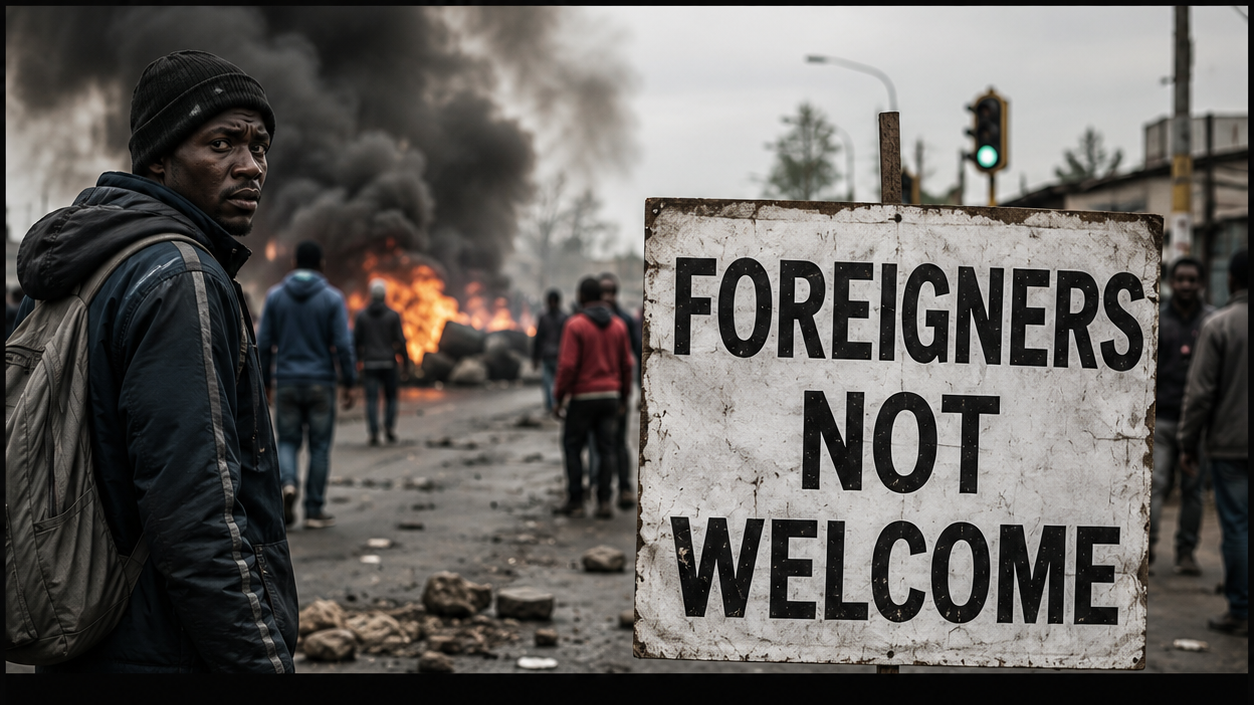
South Africa is often described as Africa's most industrialized economy. For decades, it has attracted migrants from across the continent seeking opportunity, education, safety, and a better future.
Among them have been Ghanaians, Nigerians, Zimbabweans, Ethiopians, Congolese, Somalis, Mozambicans, and many others.
Yet South Africa has also become a symbol of one of the most difficult questions facing modern societies:
What happens when economic frustration becomes directed at foreigners?
Recent tensions and recurring attacks on foreign nationals have once again raised concerns across Africa. Reports indicate that hundreds of Ghanaians and many other African nationals have sought to leave South Africa or reconsider their future there due to fears for their safety.
The situation deserves careful examination—not because South Africa is unique, but because it reflects a challenge that is emerging across much of the world.
A Global Problem, Not Just a South African One
Immigration has become one of the most debated political issues globally.
In the United States, immigration dominates election campaigns.
Across Europe, political parties have risen to prominence by promising stricter immigration controls.
In Britain, immigration was one of the driving forces behind Brexit.
In many countries, citizens increasingly ask whether their governments are doing enough to protect jobs, housing, public services, and national identity.
South Africa is therefore not alone.
What makes the South African case particularly troubling is that the targets are often fellow Africans.
Why People Become Angry
It is easy to blame hatred or prejudice alone.
But the reality is usually more complicated.
South Africa faces serious economic challenges:
High unemployment.
Youth unemployment.
Slow economic growth.
Persistent inequality.
Housing shortages.
Pressure on public services.
When millions of people struggle to find work or improve their lives, frustration naturally grows.
The danger comes when that frustration is redirected toward vulnerable groups rather than the underlying causes of economic hardship.
Foreigners can become convenient scapegoats.
A struggling citizen may see a foreign-owned shop and conclude that immigrants are taking opportunities away from locals.
Whether that perception is accurate or not, it can become politically powerful.
The Rise of Economic Nationalism
Throughout history, economic hardship has often strengthened nationalist movements.
The argument is simple:
"Our country belongs to us. Outsiders are benefiting while citizens suffer."
This message can resonate strongly during difficult times.
The problem is that reality is rarely that simple.
Many immigrants are not taking jobs from locals. They are creating businesses, employing workers, paying rent, purchasing goods, and contributing to economic activity.
Some sectors would struggle without migrant labour and entrepreneurship.
When economic problems are blamed entirely on foreigners, societies risk ignoring deeper structural issues that require real solutions.
The African Contradiction
Africa is working toward greater economic integration.
The African Continental Free Trade Area (AfCFTA), headquartered in Ghana, aims to create a more connected continent where goods, services, investment, and people can move more freely.
The vision is ambitious.
A stronger Africa built through cooperation rather than division.
Yet anti-foreigner sentiment presents a direct challenge to this vision.
If Africans become afraid to live, work, invest, or trade in other African countries, continental integration becomes much harder to achieve.
The dream of a truly interconnected African economy depends on trust and security.
The Human Cost
Behind every headline is a human story.
A trader who spent years building a business.
A student pursuing an education.
A professional working abroad.
A family trying to create a better future.
When violence erupts, these individuals often lose not only property and income but also their sense of belonging and safety.
The economic cost can be measured.
The emotional cost is harder to calculate.
What Ghana Should Learn
Ghana has generally enjoyed a reputation for hospitality and peaceful coexistence.
This should not be taken for granted.
The lesson from South Africa is not that immigration is easy or that every policy should be open-ended.
Every nation has the right to manage its borders and enforce its laws.
The lesson is that economic frustration becomes dangerous when it is allowed to evolve into hostility toward entire groups of people.
Ghana must continue to:
Create opportunities for young people.
Promote national unity.
Strengthen social cohesion.
Manage migration fairly and effectively.
Resist attempts to divide people along ethnic or national lines.
A Test for the Future
The world is entering an era in which migration is likely to increase.
Population growth, climate change, conflict, and economic disparities will continue to push people across borders.
The question facing every nation is how to balance national interests with human dignity.
South Africa's experience reminds us that economic problems cannot be solved simply by identifying outsiders as the enemy.
Real solutions require economic growth, job creation, better governance, and stronger institutions.
The challenge is not merely controlling migration.
The challenge is ensuring that fear does not replace reason, and that frustration does not replace humanity.
For Africa, the stakes are especially high.
A continent that hopes to prosper together cannot afford to turn against itself.