Why Does Ghana Wait Until Buildings Are Finished Before Taking Action?
Protecting Lives Should Never Mean Destroying Preventable Investments
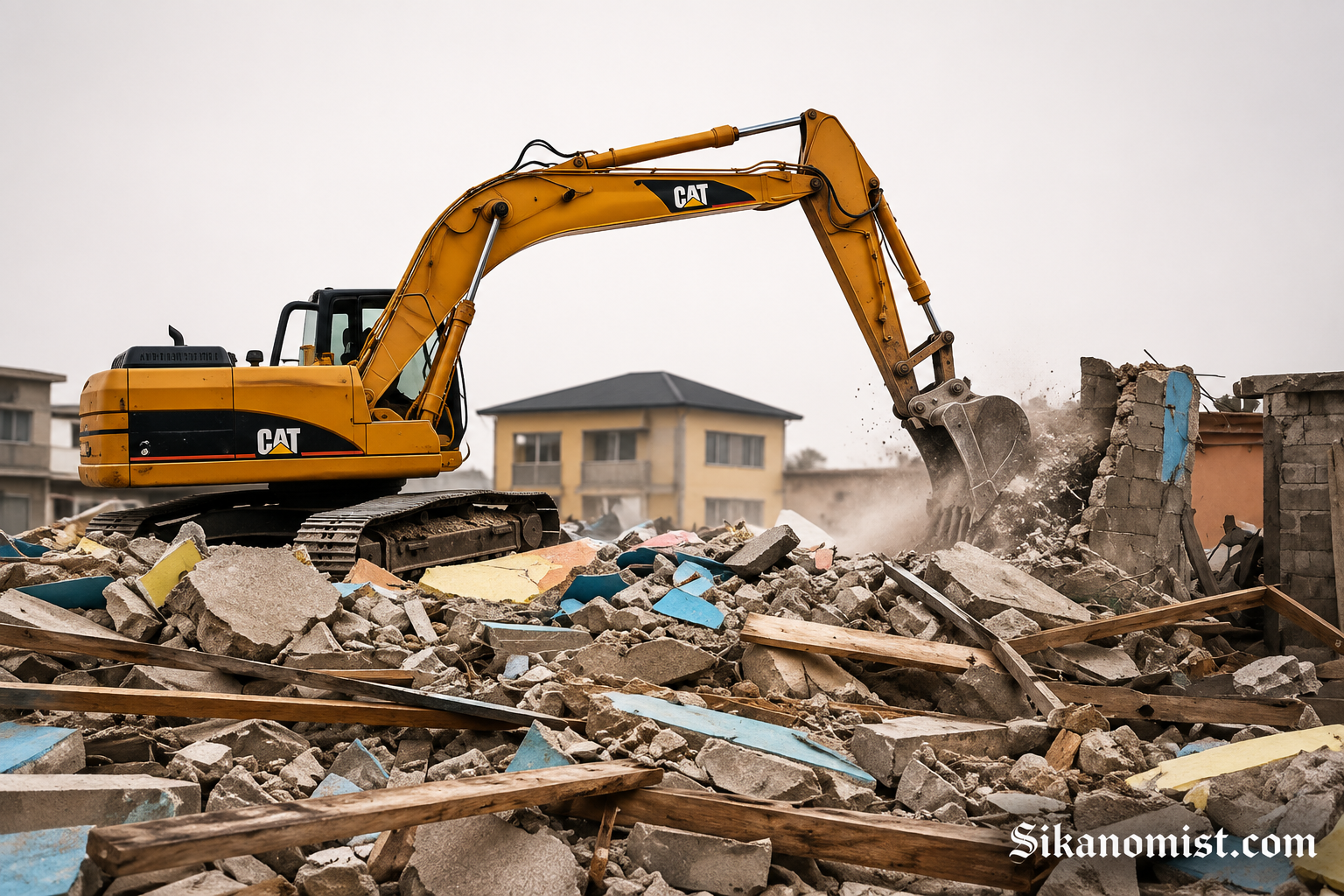
Demolishing of houses in Accra
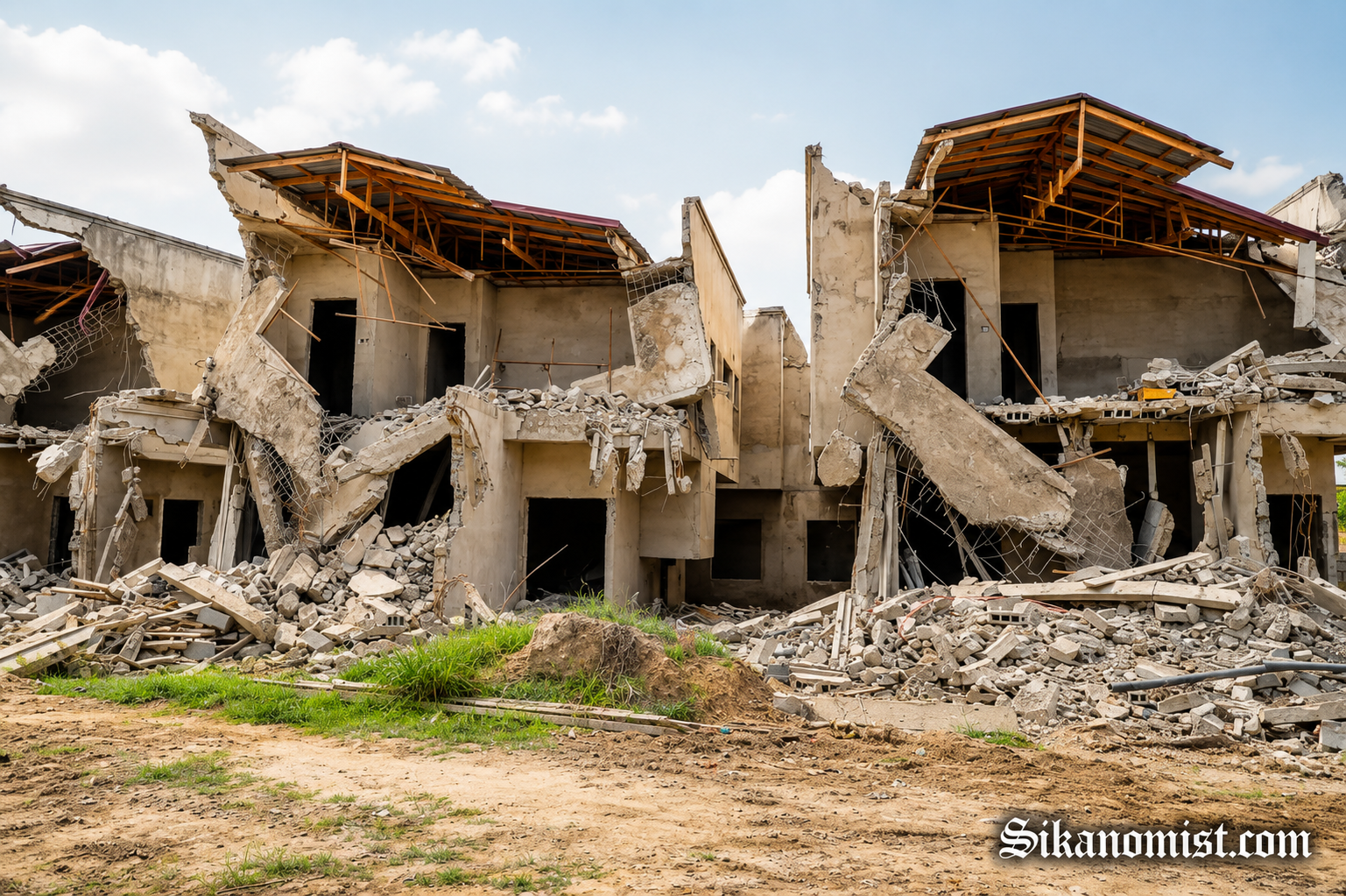
Every year, Ghana witnesses the demolition of houses, shops, apartment blocks and commercial buildings. Some are built on waterways. Others stand on road reservations, disputed land, utility corridors or protected public land. In many cases, the demolitions are legally justified because the structures violate planning regulations or threaten public safety.
Yet one question continues to trouble many Ghanaians.
If the authorities have the legal power to demolish a completed four-storey building, why do they not use that same authority to stop construction when the foundation is first laid?
This is not simply a question about demolition. It is a question about governance, economic efficiency and the protection of both public safety and private investment.
A completed building represents far more than concrete, blocks and steel. It often represents a family's life savings, years of hard work, a pension investment, a business venture or a bank loan that must still be repaid even after the building has disappeared. Some apartment blocks are built to provide rental income for retirement. Others are intended to house families or create jobs through commercial activity.
When such buildings are demolished, the financial loss is enormous. While illegal construction should not be excused, Ghana must also ask whether these losses could have been prevented much earlier.
Construction is not a secret activity. A four-storey building does not appear overnight. It begins with site clearing, excavation, foundations, columns and walls before reaching completion. Throughout this process, planning officers, local assemblies and other regulatory institutions have numerous opportunities to inspect the site and intervene where necessary.
If a project is unlawful, the least costly time to stop it is at the beginning, not after millions of cedis have already been invested.
Waiting until a building is completed before enforcement creates unnecessary economic waste. Labour, cement, steel, timber, electrical materials and countless hours of skilled work are destroyed. Banks may be left with non-performing loans. Families may lose their financial security. Businesses may collapse. At the same time, the nation loses productive assets that could have contributed to economic growth if proper planning had prevented the problem in the first place.
This raises an important institutional question.
Are Ghana's enforcement agencies sufficiently proactive, or have they become too dependent on reactive enforcement after problems have already grown beyond control?
A modern planning system should prioritise prevention over punishment. Digital building permits, routine inspections, satellite monitoring, drone surveys and clear accountability for planning officers can identify unauthorised developments long before they become expensive structures. Many countries increasingly rely on such systems because preventing an illegal building is far less costly than demolishing one.
There must also be accountability within the public institutions responsible for development control. If an illegal building rises floor by floor without any intervention, it is reasonable to ask whether inspections were conducted, whether warning notices were issued and whether the relevant authorities fulfilled their legal responsibilities. Where there has been negligence or misconduct, appropriate action should follow.
At the same time, property developers also have a duty to obey planning laws. Purchasing land without proper verification, ignoring approved building plans or continuing construction after official stop-work notices undermines orderly development and increases the risk of eventual demolition. Respect for the law is essential for every property owner.
The goal, therefore, should not be to reduce enforcement. Rather, it should be to make enforcement earlier, faster and more predictable.
Imagine a Ghana where an unauthorised foundation is identified and stopped within days instead of allowing an entire apartment block to be completed. Public safety would still be protected, but families would avoid devastating financial losses, banks would face fewer bad loans and valuable construction resources would not be wasted.
This is how mature planning systems operate. They do not measure success by the number of buildings demolished. They measure success by the number of illegal developments prevented from being built in the first place.
As Ghana continues to urbanise, strengthening development control should become a national priority. Effective planning protects lives, preserves public infrastructure, supports investor confidence and ensures that economic resources are used wisely.
The strongest planning authority is not the one that demolishes the most buildings. It is the one that prevents unlawful construction before the first wall is ever built.