The Brighter Ghana We Want Must Be Built by All of Us
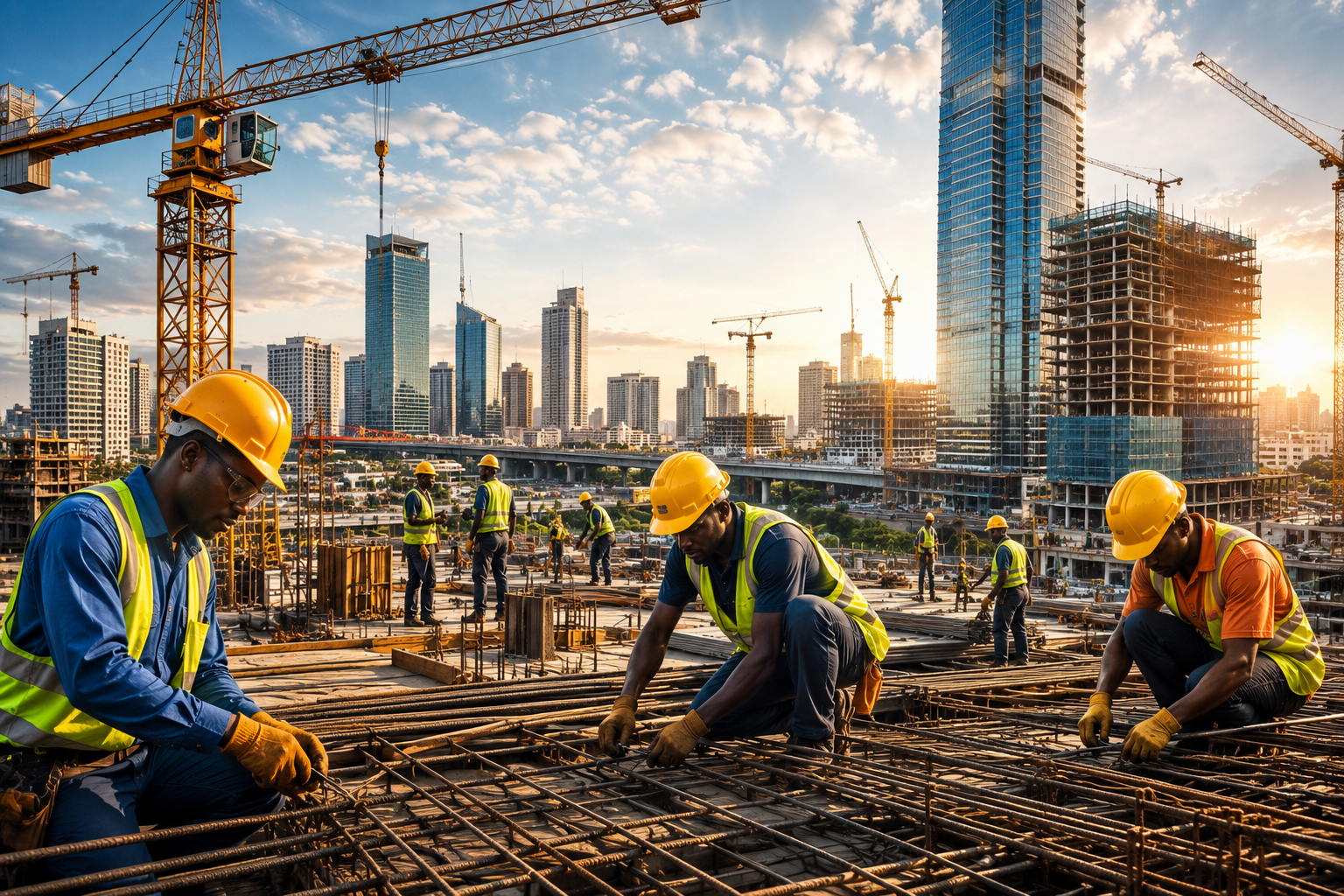
Every country needs a dream. Without a dream, people only survive from day to day. They complain about the present, fear the future, and slowly lose confidence in what is possible. Ghana cannot afford that kind of national mood. We are a country with talent, faith, culture, natural resources, young people, creativity and a strong desire to improve. Yet the brighter future many Ghanaians want will not arrive by accident. It must be built deliberately, patiently and together.
For many years, public discussion in Ghana has often focused on government. When prices rise, people blame government. When roads are poor, people blame government. When jobs are difficult to find, people blame government. In many cases, citizens are right to demand better leadership. Government has a serious responsibility to manage the economy well, protect public money, provide infrastructure, create a fair business environment and serve the people with honesty. No nation can progress when leadership is careless, corrupt or short-sighted.
But the future of Ghana cannot be built by government alone. A country is more than its politicians. It is also made up of families, teachers, traders, farmers, churches, mosques, chiefs, journalists, students, artisans, drivers, nurses, civil servants, business owners and professionals. Every day, millions of ordinary decisions shape the direction of the nation. How we work, how we trade, how we teach children, how we treat customers, how we keep our communities, how we use money and how we speak about our country all matter.
One of the most important changes Ghana needs is a change from complaint to contribution. Complaining is easy, and sometimes necessary, but it cannot be the only national language. If people complain about dirty communities but still throw rubbish into gutters, the problem continues. If people complain about unemployment but refuse to learn new skills, the problem becomes harder. If people complain about corruption but celebrate dishonesty when it benefits them, the country loses moral strength. Real change begins when citizens ask not only, “What is wrong with Ghana?” but also, “What can I do right where I am?”
This does not mean ordinary people should excuse bad leadership. Far from it. Citizens must continue to demand accountability, transparency and better public service. But accountability must also become a personal value. A nation becomes strong when both leaders and citizens accept responsibility. Ghana needs honest politicians, but it also needs honest workers. It needs serious ministers, but it also needs serious students. It needs disciplined institutions, but it also needs disciplined families, businesses and communities.
The good news is that Ghana already has many quiet builders. Across the country, young entrepreneurs are starting small businesses with little capital. Market women are feeding families and supporting education. Farmers are producing food under difficult conditions. Teachers are shaping children in classrooms that often lack enough resources. Nurses, drivers, artisans, designers, musicians, software developers and traders are all contributing to the life of the nation. These people may not always appear in the headlines, but they are part of the foundation on which Ghana’s future rests.
Business is one of the clearest areas where citizens can help build a brighter future. A small shop that keeps proper records is helping to build an economy of trust. A trader who treats customers well is helping to raise standards. A young person who learns digital marketing, fashion design, farming, coding, carpentry, catering or repair work is preparing to create value. A business owner who employs even one person is reducing pressure on one family. Ghana’s future will not be built only by large companies. It will also be built by thousands of small enterprises that grow with discipline and vision.
Communities also have a major role to play. Many national problems begin locally and can be improved locally. A clean neighbourhood does not always need a big national policy before people act. A local school can improve when parents, old students, churches, mosques and community leaders support it. Young people can be encouraged through mentorship, reading clubs, apprenticeships and practical training. Public property can be protected when citizens stop seeing it as “government property” and start seeing it as “our property”. A country becomes stronger when communities stop waiting for every solution to come from Accra.
Culture is another powerful part of Ghana’s future. Our festivals, languages, family systems, respect for elders, communal spirit and traditional leadership are valuable assets. They give us identity in a world that is becoming more connected but also more confusing. However, culture must also be examined with wisdom. The parts of our culture that promote unity, dignity, discipline and belonging should be preserved. The parts that create unnecessary financial pressure, waste and competition should be reformed. A confident nation does not abandon its culture, but it improves it for the next generation.
Citizenship must also become more serious. Democracy is not only about voting every four years. It is about how people think, behave and participate in public life. A good citizen does not sell a vote and later complain about poor leadership. A good citizen does not spread false information simply because it supports a political side. A good citizen does not destroy public facilities and then blame the state for poor services. Ghana needs citizens who can support political parties without losing their love for the country. Party loyalty must never be stronger than national loyalty.
Technology and innovation give Ghana another reason to be hopeful. A young person in Kumasi, Tamale, Takoradi, Cape Coast or Accra can now use a phone to learn, sell, publish, advertise, design, code, trade and connect with the world. Artificial intelligence, social media, mobile money, online learning and digital business tools are opening doors that did not exist for previous generations. But these tools must be used wisely. Technology should not only entertain us; it should help us solve problems, create jobs, tell Ghanaian stories and sell Ghanaian products to the world.
The Ghanaian diaspora also has an important place in this national project. Ghanaians abroad carry skills, networks, capital and experience that can support development at home. But the relationship between Ghana and its diaspora should go beyond remittances. It should include investment, mentorship, knowledge transfer, tourism, trade and cultural exchange. A Ghanaian in London, New York, Toronto, Berlin or Johannesburg can still be part of Ghana’s future. Distance does not remove responsibility; in many cases, it can increase opportunity.
To build a brighter Ghana, we must also change the way we speak about the country. Honest criticism is necessary, but constant hopelessness is dangerous. When a nation repeatedly tells itself that nothing can work, people stop trying. They stop investing effort. They stop believing in public good. They lower their standards and accept failure as normal. Ghana needs a new national confidence, not blind optimism, but disciplined hope. This is the kind of hope that sees problems clearly but still believes they can be solved.
The future will not be built in one election cycle, one budget statement or one political promise. It will be built through millions of small acts repeated over time. A teacher preparing lessons well. A trader refusing to cheat a customer. A parent encouraging a child to read. A journalist choosing truth over noise. A young person learning a skill instead of giving up. A public officer refusing a bribe. A business owner paying workers fairly. A community cleaning its surroundings. A citizen voting with wisdom. These are not small things. They are the bricks of national progress.
Ghana’s brighter future is not a fantasy. It is possible. But it requires a different mindset. We must stop seeing the country only as something to benefit from and start seeing it as something to build. We must stop waiting for perfect conditions before we contribute. We must stop thinking that national development belongs only to those in power. The work belongs to all of us.
Government matters. Leadership matters. Policy matters. But citizens matter too. Families matter. Businesses matter. Communities matter. Culture matters. Ideas matter. If Ghana is to become the country many people dream of, then the dream must move from speeches into daily action.
The brighter Ghana we want will not be built by government alone. It will be built by all of us — one honest decision, one useful skill, one strong business, one responsible community and one hopeful generation at a time.