Are DV Number Plates the New Car Number Plates in Ghana?
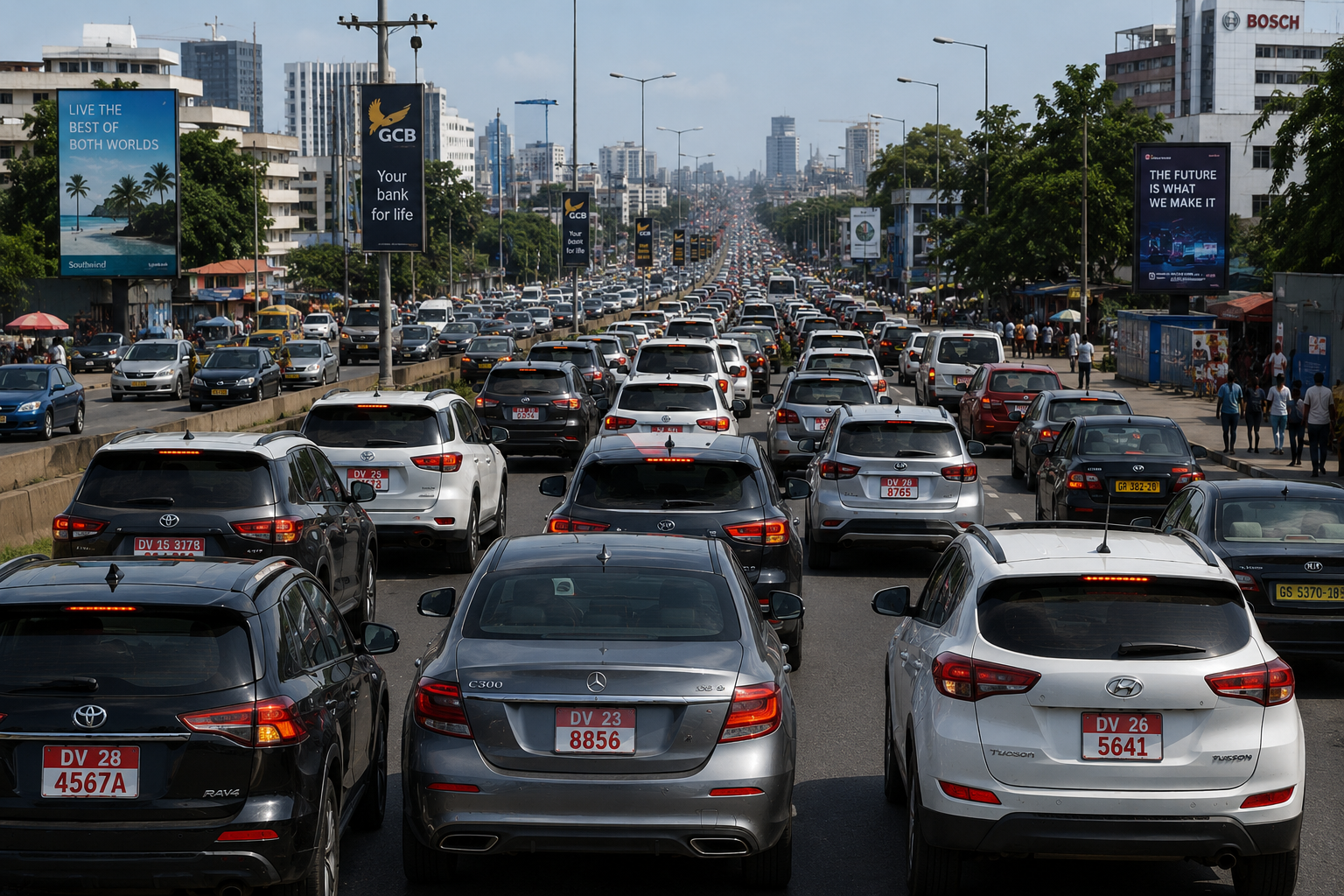
Every road tells a story about a country. The vehicles we drive, the roads we build and even the number plates we display reflect how well our institutions function. In recent months, one feature has become impossible to ignore on Ghana's roads. From Accra to Kumasi, Takoradi to Tamale, an unusually large number of private vehicles are displaying red-and-white DV number plates.
Years ago, seeing a DV plate was relatively uncommon. They were mainly found on vehicles being transported from ports, driven by car dealers, tested by garages after repairs or moved before registration. Today, however, many brand-new SUVs, luxury saloons and even everyday family cars appear to remain on DV plates for extended periods. This has prompted an important question: Are DV number plates becoming the new normal in Ghana?
To answer this, it is worth remembering what DV plates are intended to do.
According to Ghana's Driver and Vehicle Licensing Authority (DVLA), DV number plates are temporary registration plates issued to licensed motor vehicle dealers, manufacturers and authorised garage operators. Their purpose is straightforward: to allow unregistered vehicles to be moved legally for delivery, demonstration, inspection, testing or repair before they receive permanent registration.
In other words, a DV plate was never designed to become a vehicle's long-term identity. It is a temporary administrative tool rather than a substitute for permanent registration.
Yet what many Ghanaians now observe appears very different from that original purpose. Vehicles that seem privately owned continue to display DV plates weeks or even months after appearing on the roads. Some are regularly seen in office car parks, shopping centres, schools and residential neighbourhoods, suggesting they are being used as ordinary private vehicles rather than for dealer operations.
Whether every one of these vehicles is operating within the law is difficult to determine without official records. However, the widespread visibility of DV plates raises legitimate questions about compliance and enforcement.
Several explanations could account for the growing presence of DV plates.
One possibility is that vehicle imports have increased, meaning more newly imported cars are temporarily using dealer plates before registration.
Another possibility is delays within the registration process. If obtaining permanent number plates takes longer than expected, more vehicles may remain on temporary plates for extended periods.
A third possibility is misuse. If temporary dealer plates are being used beyond their intended purpose, the system risks losing its credibility. A plate designed for short-term movement should not become a convenient way of avoiding timely registration or reducing regulatory oversight.
Whatever the explanation, transparency matters.
Permanent vehicle registration serves several important public purposes. It establishes clear ownership, improves road safety enforcement, supports insurance verification, assists criminal investigations and enables efficient revenue collection through taxes and registration fees. Reliable vehicle records are also essential for transport planning and public administration.
When temporary plates become widespread, these benefits can be weakened. It may become more difficult for enforcement agencies to identify vehicles quickly. Honest vehicle owners who complete registration promptly may also feel disadvantaged if others appear able to use temporary plates indefinitely.
This issue is not unique to Ghana. Around the world, countries issue temporary dealer or trade plates under carefully controlled conditions. In the United Kingdom, trade plates are restricted to authorised dealers and may only be used for specified business purposes. Similar systems exist across Europe, North America and many African countries, where strict monitoring helps prevent abuse.
The lesson is simple. Temporary registration systems work best when they remain genuinely temporary.
This is not an argument against DV plates. Ghana's motor industry needs them. Vehicle dealers require them to transport new vehicles. Mechanics need them for road testing after repairs. Manufacturers and importers depend on them to conduct legitimate business efficiently.
The real question is whether the current level of use reflects genuine business activity or whether the original purpose of the system is gradually being stretched beyond recognition.
The Driver and Vehicle Licensing Authority is therefore in the best position to provide clarity. Publishing regular data on the number of active DV plates, the period for which they may legally be used and the measures in place to prevent misuse would help reassure the public. Strong enforcement, where necessary, would also protect the integrity of the registration system.
Public confidence in government institutions depends not only on good laws but also on visible and consistent enforcement. When rules appear to apply equally to everyone, trust grows. When exceptions become commonplace, questions naturally follow.
Perhaps the issue is not that Ghana has too many DV plates. Perhaps the issue is that many citizens no longer understand how they are supposed to be used. That uncertainty alone is reason enough for a national conversation.
As Ghana continues modernising its transport sector, strengthening compliance should remain as important as expanding vehicle ownership. A registration system should be simple, transparent and respected by all.
The sight of red-and-white DV plates across the country has certainly started an important discussion. The question now is one that only clear evidence and effective regulation can answer:
Are DV number plates simply serving their temporary purpose, or are they quietly becoming the new number plates on Ghana's roads?
Reader's Question
Have you noticed more vehicles using DV number plates in your area, and what do you think is the main reason behind it?