Can Ghana Honour Its Dead While Investing More in the Living?
Finding a Better Balance Between Tradition and Prosperity
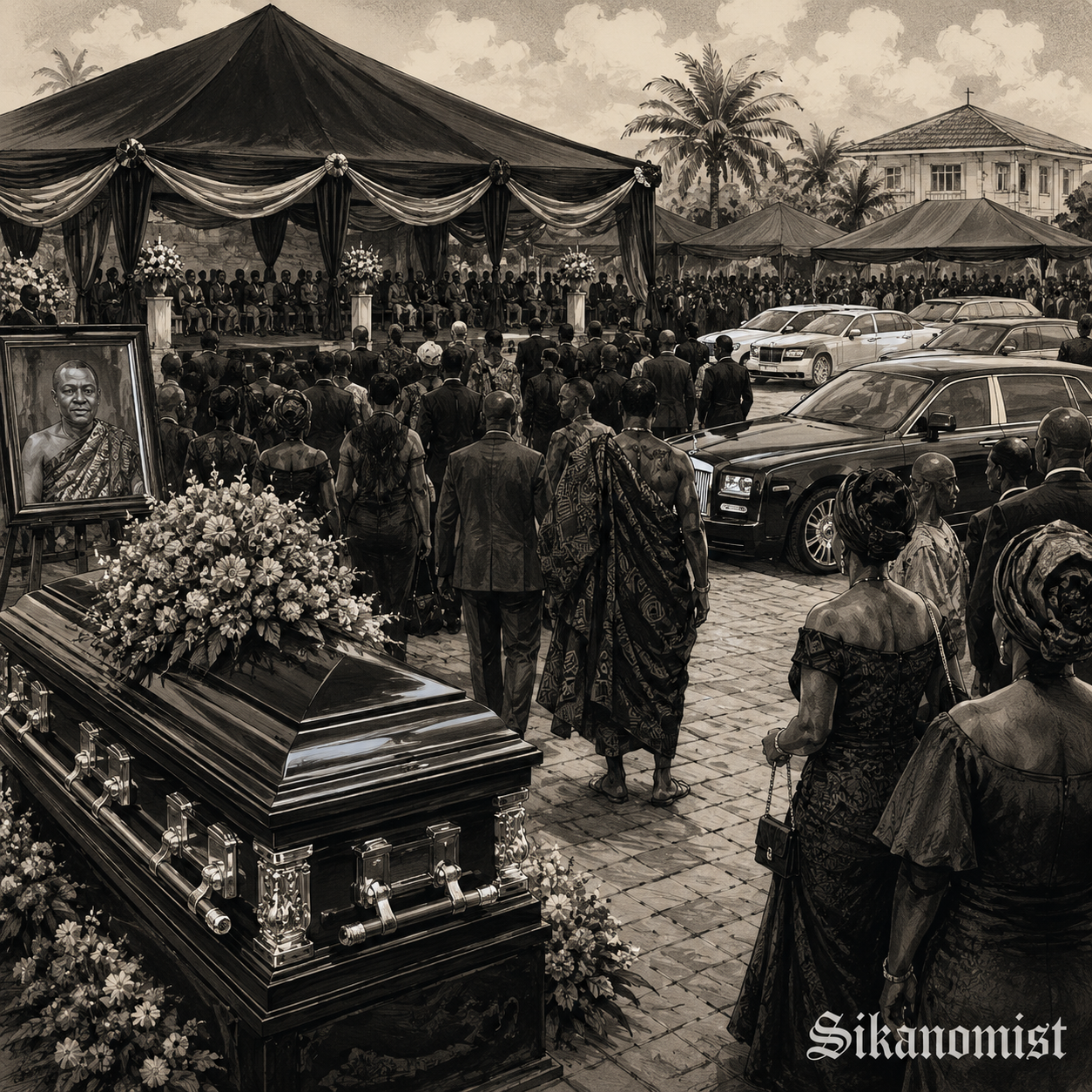
Few traditions are as deeply rooted in Ghanaian society as the way we honour our dead. Across every region and among every ethnic group, funerals are more than ceremonies to say goodbye. They are occasions that bring families together, strengthen friendships, celebrate a life well lived, and remind communities of the importance of unity. They reflect values that Ghanaians hold dear: respect for elders, love for family, generosity towards others, and the belief that no one should make their final journey alone.
These traditions have helped shape Ghanaian society for generations. They have preserved our culture, strengthened family ties and created a strong sense of belonging that many countries admire. In a world where many communities are becoming increasingly individualistic, Ghana's funeral culture continues to demonstrate the importance of togetherness and mutual support.
However, every generation has a responsibility to ask whether the way it practises its traditions still serves the needs of society. Asking such questions is not a rejection of culture. It is a way of ensuring that culture continues to strengthen rather than weaken the nation.
As Ghana seeks to create more jobs, build stronger businesses and improve living standards, one important question deserves thoughtful discussion:
Can Ghana continue to honour its dead with dignity while investing more in the future of those who are still living?
This question is not about choosing between culture and economic development. Rather, it is about finding a balance that allows Ghana to preserve its traditions while giving families and businesses greater opportunities to build wealth and create a better future.
The Value of Ghana's Funeral Culture
Funerals play an important role in Ghanaian life because they do much more than mark the passing of a loved one. They bring people together at a time of grief and remind families that they are not alone. Relatives travel from different parts of the country and abroad to offer support. Old friends reconnect. Family disagreements are often resolved. Religious leaders offer comfort, while traditional customs help communities express respect for those who have passed away.
This spirit of togetherness is one of Ghana's greatest strengths. It reminds us that life is about more than personal success and that every individual is part of a wider family and community.
Funerals also support many livelihoods. Tailors produce funeral cloth, caterers prepare meals, decorators provide tents and seating, photographers capture memories, musicians perform, transport operators carry mourners, and printers produce funeral programmes. Thousands of small businesses across Ghana depend, at least in part, on the funeral economy.
These are genuine benefits that should be recognised. Any discussion about funeral culture must begin by acknowledging its important contribution to Ghanaian society.
When Honour Becomes Expensive
While the values behind funerals remain important, the cost of organising them has increased significantly over the years.
In many communities, funerals have become larger and more elaborate than they were in the past. Families often feel pressure to organise events that match what others have done. Large receptions, expensive decorations, multiple sets of funeral cloth, elaborate catering and entertainment have become common features of many funerals.
In some cases, the success of a funeral is judged less by the respect shown to the deceased and more by the size of the event.
This creates pressure on families, particularly those with limited financial resources. Many feel they cannot reduce costs because they fear criticism from relatives or members of the community.
As a result, some families borrow money, use savings that had been set aside for other purposes or postpone important investments in order to meet social expectations.
The Growing Pressure of Sika Nsa
One of the most respected traditions in Ghanaian funerals is the giving of cash donations, widely known as sika nsa or nsawa in many communities.
The purpose of these donations is both practical and compassionate. They help bereaved families meet funeral expenses and demonstrate that the wider community shares their grief.
For generations, this tradition has reflected generosity and mutual support.
However, changing social expectations have altered the way many people experience it.
Today, the amount someone is expected to contribute is often influenced by how successful they appear to be. Business owners, professionals, politicians, public servants and other prominent members of society frequently feel under pressure to give larger amounts because of their position.
In some cases, donations are publicly announced or carefully recorded, making comparisons between contributors almost unavoidable.
What began as an act of voluntary kindness can gradually become a social obligation.
The Hidden Cost to Investment
Every cedi that is spent on one purpose cannot be spent on another.
Economists describe this as opportunity cost.
This idea is simple but important.
Money used to meet repeated social obligations could also be used to buy farming equipment, expand a business, employ another worker, pay school fees, improve a family home or invest in new ideas.
For entrepreneurs, access to capital is often one of the biggest barriers to growth. Many small businesses struggle to expand because they lack sufficient savings or investment.
When large amounts of personal income are regularly directed towards expensive ceremonies, less money remains available for productive investment.
No single funeral is likely to prevent a business from succeeding. However, when contributions are made to numerous funerals over many years, the cumulative financial effect can become significant.
A Challenge for Ghana's Entrepreneurs
Imagine two business owners with the same talent and ambition.
One lives in Ghana, where social obligations require frequent and often substantial financial contributions.
The other lives in a country where such obligations are less costly.
Over twenty years, the Ghanaian entrepreneur may spend tens of thousands of cedis on funeral donations and related social commitments.
The other entrepreneur reinvests that same money into machinery, technology, staff training and business expansion.
Neither person lacks compassion.
Neither is wrong.
But one business is likely to grow faster because more of its income is available for investment.
When this situation is repeated across thousands of businesses, it can influence the pace of economic growth, job creation and national productivity.
This is why discussions about funeral spending are not simply cultural conversations. They are also economic conversations.
Respect Cannot Be Measured by Money
One of the most important questions Ghana should ask is whether respect for the dead should be measured by how much money is spent after they have passed away.
A meaningful funeral does not necessarily require extravagant spending.
A simple ceremony attended by people who genuinely loved and respected the deceased may honour their memory far more than an expensive event organised mainly to satisfy social expectations.
The value of a person's life is measured by the character they displayed, the relationships they built and the legacy they leave behind, not by the cost of their funeral.
Culture Can Evolve Without Being Lost
Some people worry that reducing funeral costs would mean abandoning Ghanaian culture.
History suggests otherwise.
Every culture changes over time.
The way Ghanaians dress, marry, educate their children and conduct business has changed significantly over the decades.
These changes have not destroyed our culture. Instead, they have allowed it to adapt to new realities.
The same can happen with funerals.
The values that matter most—respect, compassion, family and community—can remain strong even if ceremonies become simpler and more affordable.
A Better Balance for the Future
The goal should not be to make funerals less meaningful.
The goal should be to make them more sustainable.
Communities could encourage dignified funerals without unnecessary competition.
Families should feel free to organise ceremonies that reflect their financial circumstances without fear of criticism.
Cash donations should remain acts of kindness rather than obligations based on social status.
Religious institutions, traditional leaders, community organisations and families themselves can all help encourage a culture that values dignity above display.
At the same time, Ghanaians should celebrate families who invest in education, businesses, healthcare and community development with the same enthusiasm shown towards large public ceremonies.
Honouring the Dead by Building the Future
Most parents spend their lives working so that their children can enjoy better opportunities than they had.
They dream of educated grandchildren, successful family businesses, secure homes and prosperous communities.
It is difficult to imagine that many would want those dreams to be delayed because their families felt obliged to organise an expensive funeral beyond their means.
Perhaps one of the greatest ways to honour those who have passed away is to continue building the future they hoped to see.
A child completing university.
A small business growing into a large employer.
A family buying its first home.
A young entrepreneur receiving the investment needed to succeed.
These achievements honour the sacrifices of previous generations just as surely as any funeral ceremony.
A Conversation Ghana Should Not Avoid
Every nation must occasionally examine its customs and ask whether they continue to serve the common good.
This should not be viewed as criticism of Ghanaian culture. On the contrary, it is a sign of a confident society that is willing to improve while remaining true to its values.
The question is not whether funerals are important because they are.
The question is whether the current scale of spending always reflects the values we wish to preserve.
Ghana has the opportunity to show that it is possible to honour the dead with dignity while investing more in the living.
If we can preserve the compassion, unity and respect that define our funeral culture while reducing unnecessary financial pressure, we will not be weakening our traditions.
We will be strengthening them.
For in the end, the greatest tribute we can pay to those who came before us is not simply to remember them well, but to build a stronger, more prosperous Ghana for those who come after us.
Question for Readers
How can Ghana preserve the dignity and beauty of its funeral traditions while reducing the financial burden on families and encouraging greater investment in the nation's future?