Burkina Faso's Agriculture and Agro-Industry, the game changer.
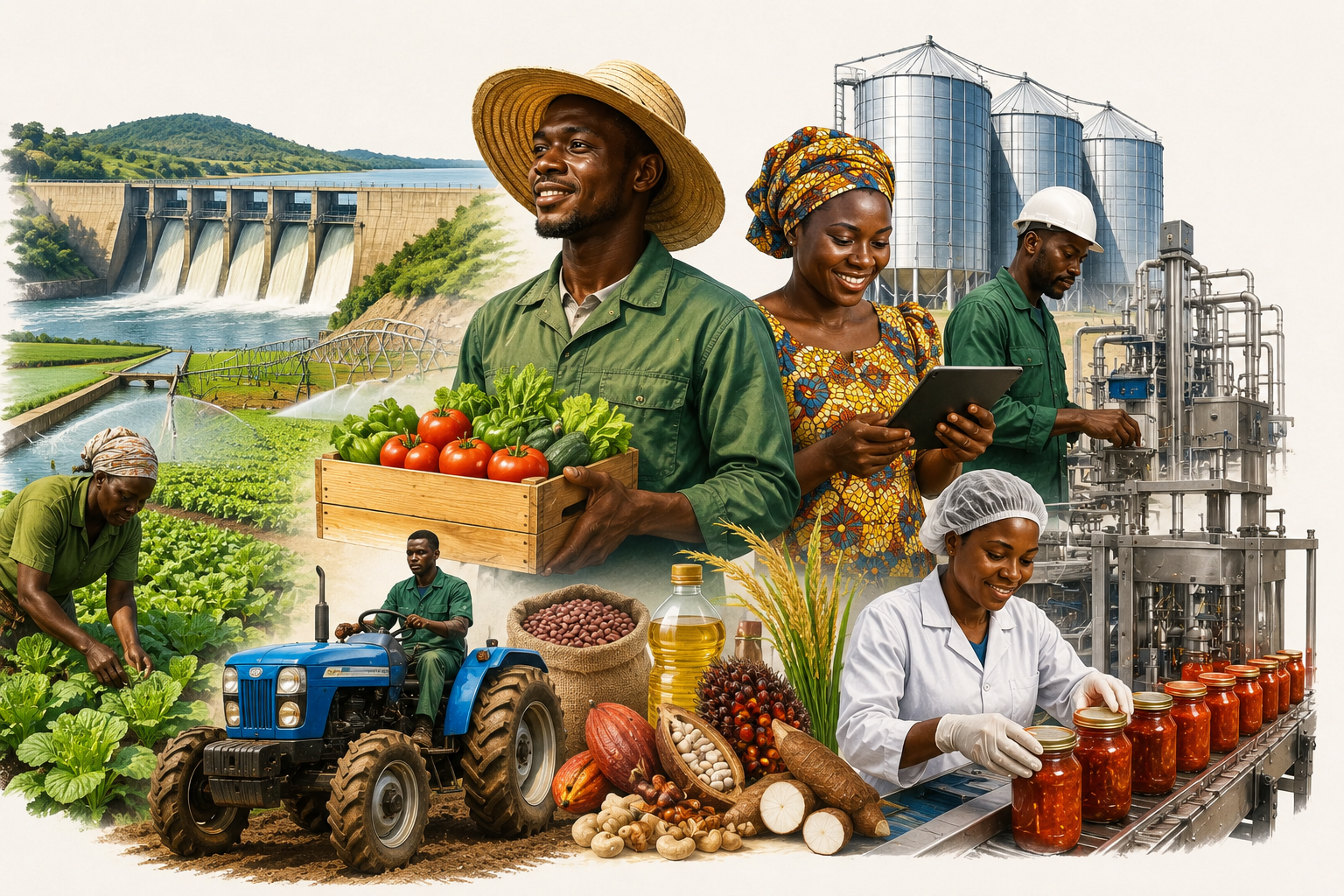
Agriculture has always been the backbone of many African economies, yet too many countries continue to export raw produce while importing expensive food and manufactured goods. In recent years, Burkina Faso has shown a growing commitment to strengthening its agricultural sector through irrigation, dam construction and greater attention to agro-industrial development. Although the country continues to face serious security and economic challenges, its efforts to increase agricultural productivity offer valuable lessons for Ghana.
Rather than asking which country is doing better, Ghana should ask a more useful question: what practical ideas can help our farmers produce more food, earn better incomes and support industrial growth?
One of the most important lessons is the value of water management. Agriculture should not depend entirely on the rainy season. Across many parts of Burkina Faso, investments in dams, reservoirs and irrigation systems have helped farmers cultivate crops during the dry season, reduce the impact of drought and increase annual production. Reliable access to water allows farming to become a year-round business instead of a seasonal activity.
Ghana is blessed with many rivers, streams and rainfall patterns that provide enormous potential for irrigation. Yet much of the country's farming still depends on unpredictable weather. Expanding irrigation infrastructure, especially through small and medium-sized community dams alongside larger national projects, could transform agricultural production across many regions. With dependable water, farmers can produce vegetables, cereals, fruits and other crops throughout the year, increasing both food security and household incomes.
Another lesson is the close relationship between agriculture and industry. Farming alone does not create the maximum economic value. The real opportunity comes when agricultural produce is processed into finished or semi-finished products. Tomatoes become paste, cassava becomes starch and flour, cocoa becomes chocolate, shea nuts become cosmetics, cotton becomes textiles and mangoes become packaged juices. Every stage of processing creates additional jobs, skills and business opportunities.
Ghana has enormous potential to become a leading agro-industrial economy in West Africa. The country produces cocoa, cashew, oil palm, maize, rice, yam, cassava, plantain, pineapple, mangoes, coconuts and many other valuable crops. Instead of exporting most of these products in their raw form, Ghana can encourage greater investment in food processing, packaging and manufacturing. This would increase export earnings while creating employment for thousands of young people.
Storage is another area where improvements can make a significant difference. Many farmers lose part of their harvest because of inadequate storage facilities and poor transport networks. Modern warehouses, cold storage systems and efficient logistics would reduce post-harvest losses and ensure that more food reaches consumers and factories in good condition. Reducing waste is often one of the quickest ways to improve agricultural productivity without increasing the amount of land under cultivation.
Mechanisation also deserves greater attention. Smallholder farmers should have affordable access to tractors, harvesters, irrigation pumps and other modern equipment through equipment-sharing centres or agricultural service providers. Mechanisation reduces labour shortages, improves efficiency and enables farmers to cultivate larger areas within the limited planting season.
Agricultural finance remains another challenge. Farmers need affordable credit to purchase quality seeds, fertilisers, machinery and irrigation equipment. Financial institutions, government agencies and private investors all have important roles in expanding access to agricultural finance while managing risks responsibly.
Research and innovation are equally essential. Universities, research institutes and extension officers should work closely with farmers to develop improved crop varieties, modern farming techniques and climate-smart agricultural practices. Better knowledge often delivers higher productivity than simply increasing expenditure.
Perhaps the greatest lesson is that agriculture should not be viewed as a subsistence activity but as a modern business. Successful farming today requires planning, technology, investment, processing, marketing and access to domestic and international markets. When agriculture is treated as an industry, it becomes a powerful engine for national development.
Ghana already has significant advantages. It enjoys a favourable climate, fertile land, access to the sea, growing transport infrastructure and an entrepreneurial farming community. By combining these strengths with greater investment in irrigation, water storage, agro-processing and rural infrastructure, Ghana can significantly increase food production while creating new industries that add value to agricultural products.
Every country has something to teach another. Burkina Faso's growing emphasis on irrigation, water management and agro-industrial development offers ideas that deserve careful study. Ghana does not need to copy another nation, but it should never hesitate to learn from successful policies wherever they are found.
The future of Ghana's economy may depend not only on what grows from its soil, but also on how effectively those harvests are transformed into industries, exports, jobs and lasting prosperity. Agriculture is more than feeding a nation—it can become the foundation of a modern industrial economy.
Reader Question
If you could recommend one agricultural project that every district in Ghana should invest in, would it be irrigation, dams, agro-processing factories, storage facilities or mechanised farming? Why?