Ghana’s Economy Is Growing. How Can More Ghanaians Grow With It?
Ghana’s latest growth figures offer encouragement. The next task is to widen participation through productive jobs, stronger local businesses and investment in the everyday needs of people living in Ghana.
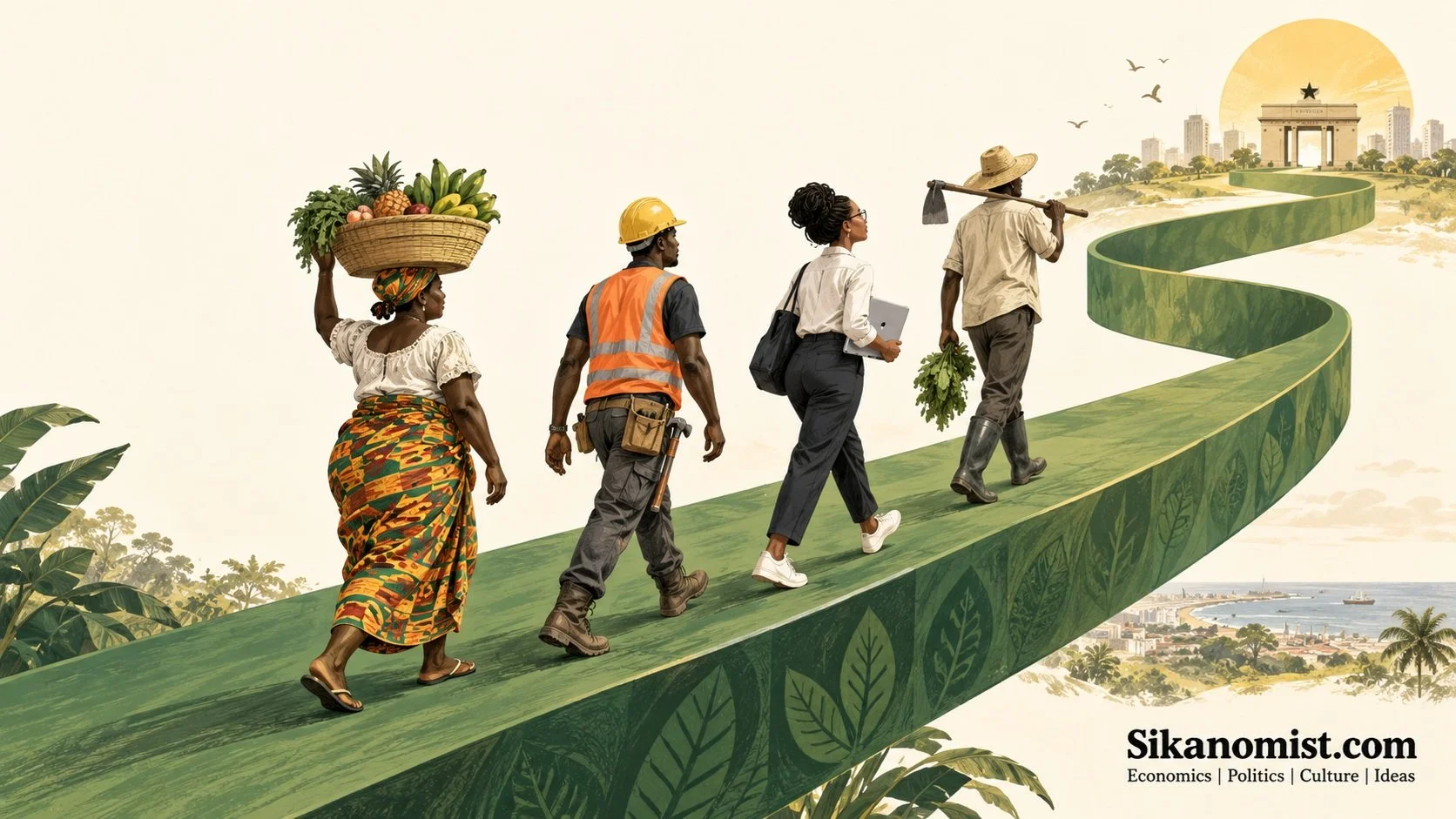
For a trader in Kumasi, economic progress might mean selling enough to restock without borrowing at punishing rates. For a young carpenter, it could mean steady orders and the chance to employ an apprentice. For a family, it might mean paying for food, rent and school without choosing which necessity to postpone. These are the everyday outcomes that give national growth its meaning.
Ghana’s economy expanded by 6.0% year on year in the second quarter of 2026. Communications helped drive the expansion, according to official figures reported on 9 September. That is encouraging news: the country produced more than it did a year earlier. Reuters
The next question is how more people can participate. Gross domestic product measures production across the economy. It does not tell us, on its own, whose income increased, whether work became more secure or which communities gained opportunities. Growth and household hardship can coexist. Understanding that distinction helps us ask better questions without dismissing genuine progress.
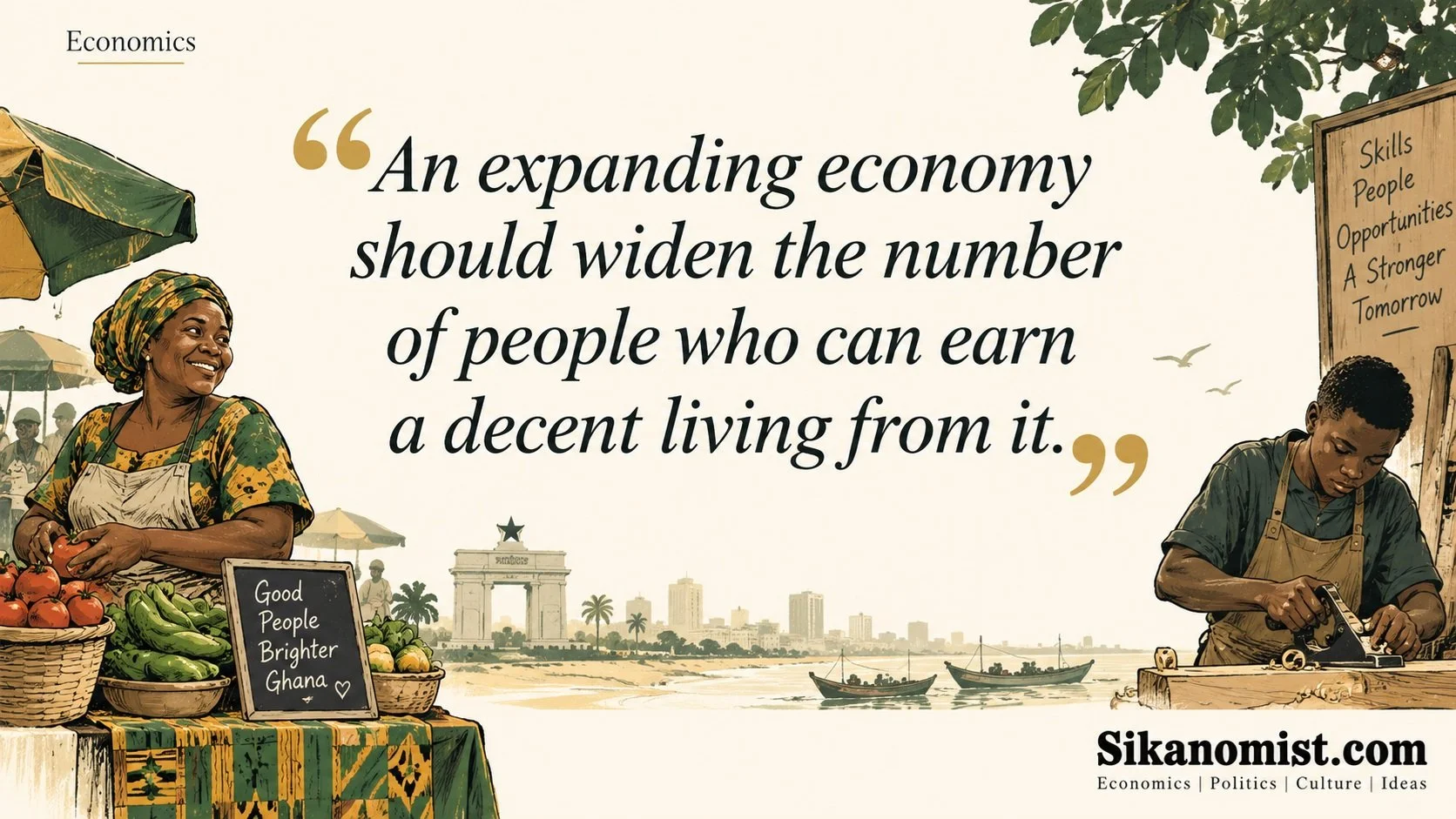
An expanding economy should widen the number of people who can earn a decent living from it. This requires attention to where investment goes, how businesses employ people and whether smaller enterprises can supply larger ones. A growing company creates wider benefits when it buys competitively from local producers, trains workers and pays suppliers promptly.
Ghana should therefore give greater attention to the economy of everyday needs. Food, housing, transport, repairs, clothing and care offer opportunities to improve living standards while building businesses. These activities already belong within the national accounts; the issue is the prominence they receive in public discussion and investment decisions. A stronger domestic economy gives more people a stake in national progress.
Consider food. A farmer needs more than encouragement to increase production. Reliable water, suitable storage, good roads and dependable buyers help turn a harvest into income. Processors need consistent supplies and reliable power. Investment across these connections can reduce waste, support employment and improve availability. Success should include both viable farm earnings and food that households can afford.
Housing offers another opportunity, provided Ghana builds where people need to live and at prices they can realistically pay. Well-planned development can support masons, electricians, plumbers, carpenters and material suppliers. But construction alone is insufficient. Secure land rights, drainage, transport connections and workable financing determine whether buildings become useful homes. Empty estates and unfinished structures cannot deliver the same benefits as occupied, serviced communities.
The communications sector’s contribution also deserves practical attention. Better connectivity can help a trader find customers, a farmer compare offers and a small manufacturer manage orders. Yet access must be affordable, reliable and accompanied by useful skills. A digital economy becomes more valuable when it makes the physical economy work better. Its promise includes helping existing businesses become more productive.
Small enterprises need similarly concrete support. Predictable permits, straightforward taxes, prompt payment and access to suitable equipment can matter as much as a new funding announcement. Credit should match a business’s capacity to repay and the time its investment needs to generate income. Lending without sound assessment can leave entrepreneurs carrying debt instead of building stronger businesses.
Employment policy should also look beyond the number of people described as working. Earnings, hours, safety and opportunities to learn matter. Apprenticeships linked to actual demand can help young people enter useful trades. Public contracts could include proportionate training requirements and transparent reporting, while avoiding conditions so complicated that capable smaller firms cannot compete.
Government should publish a clear account of progress alongside GDP: employment, earnings after inflation, household consumption and access to essential services, with regional differences visible. Each indicator should carry its own reporting date. This would help citizens distinguish what the latest growth release establishes from what requires separate evidence.
Public resources are limited, so choices must be disciplined. Completing a useful road, improving a market’s storage or fixing an electricity bottleneck may deliver more than starting another prestigious project. Investments should be judged by their costs, maintenance needs and measurable benefits. Stable public finances also matter: gains become harder to sustain when inflation and debt pressures return.
Ghana has reason to welcome economic expansion. The opportunity now is to make participation broader and more productive, so that people can build livelihoods by meeting one another’s needs. Ghana’s next achievement should be growth that more people can help to create.
Practical recommendations
Government and the Statistical Service: Present GDP alongside clearly dated indicators of jobs, real earnings and household welfare.
District assemblies: Prioritise practical constraints facing local producers, including market facilities, drainage, access roads and permits.
Banks and business-support agencies: Match financing and equipment support to viable business plans and repayment capacity.
Large employers and public procurers: Improve supplier payment practices and create realistic opportunities for local firms and apprentices.
Infrastructure agencies: Assess projects by usefulness, affordability and maintenance needs before committing public funds.