Ghana’s New Car Plants Should Help Build a Parts Industry
Zonda Tec’s new assembly investment offers Ghana an opportunity to attract specialist component manufacturers. Turning that opportunity into lasting industrial growth will require technical partnerships, competitive prices and dependable demand.
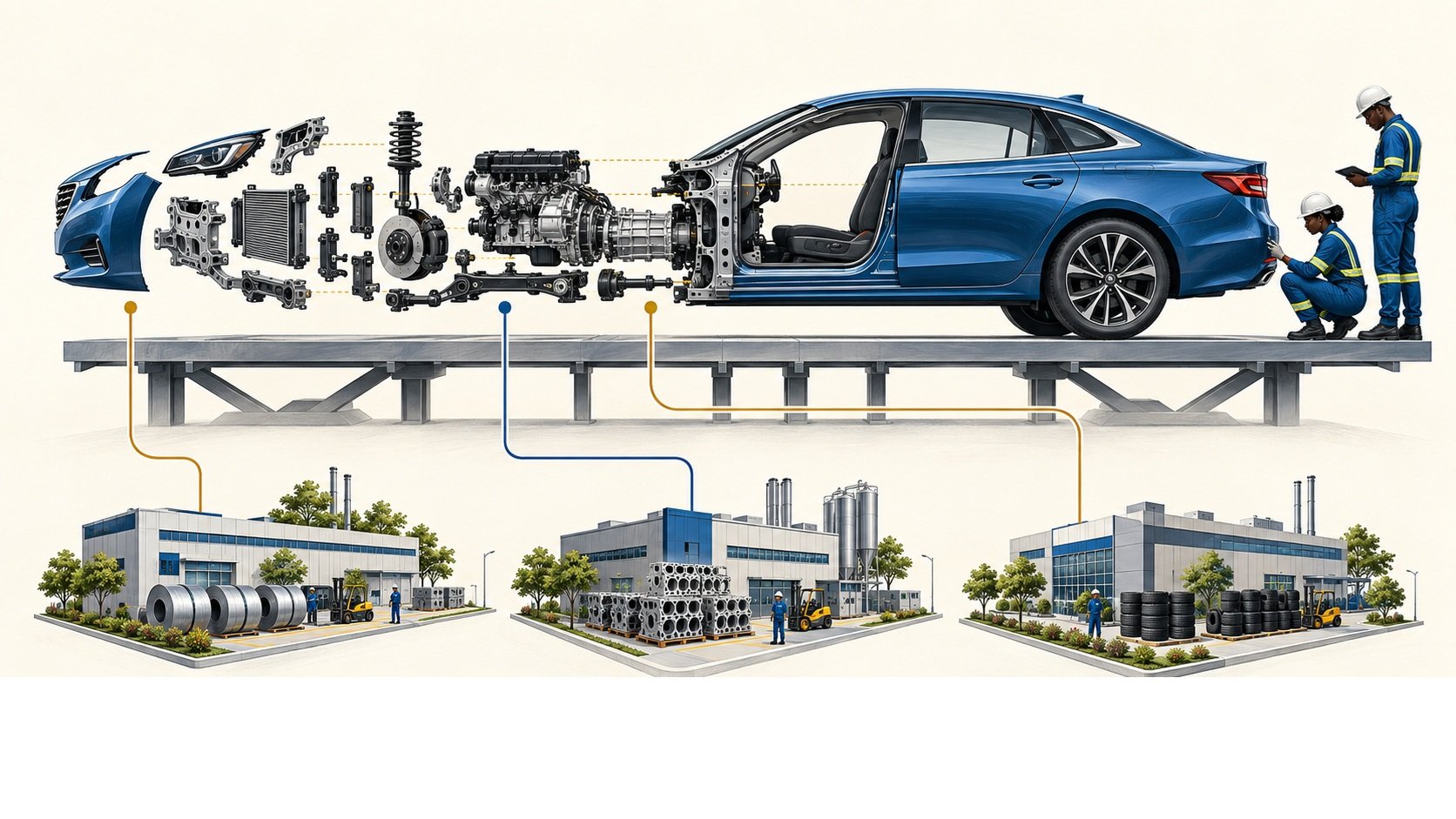
A vehicle rolling out of a Ghanaian assembly plant is worth celebrating. Behind it are workers earning incomes, technicians gaining experience and investors committing capital. The next opportunity lies in the components that make up the vehicle—and the factories Ghana could attract to manufacture some of them.
Zonda Tec’s chief executive says its new plant has annual capacity for at least 12,000 vehicles and that the company directly employs more than 800 skilled Ghanaians. The facility is intended to assemble SUVs, pickups and electric vehicles. These are company-reported figures: production capacity is not the same as actual output, and the employment figure covers the company. Citi Newsroom
The announcement should open a serious discussion about supplier investment. Which components could eventually be manufactured competitively in Ghana? What equipment and expertise would investors need? How could vehicle assemblers and their international manufacturing partners help qualified suppliers enter their production networks?
An assembly plant becomes a stronger foundation for development when other productive businesses can grow around it.
This requires precision about the capabilities involved. Repairing an existing vehicle and supplying components for a new one serve different markets. Experience in repair and fabrication can provide useful skills, but it does not automatically qualify a workshop for a manufacturer’s supply contract. Ghana should avoid treating that transition as immediate or straightforward.
A new component must do more than look polished. Its materials, dimensions, durability and performance must meet the buyer’s requirements consistently. The manufacturer must be able to identify its production history, investigate defects and deliver repeat orders reliably. These capabilities require suitable machinery, trained personnel and disciplined production systems.
The practical route is to encourage dedicated component manufacturers to establish operations in Ghana. Ghanaian investors could participate independently or through partnerships with experienced foreign firms. International suppliers could bring production knowledge, equipment and established relationships with vehicle brands. The objective should be viable businesses that create skilled employment and build manufacturing capability locally.
There are useful lessons abroad. Germany’s automotive strength includes close collaboration between manufacturers and suppliers, supported by skilled workers and research capacity. Toyota’s procurement approach stresses competition, trust and capable partners. Research on China’s parts industry also highlights the participation of multinational suppliers where domestic technological capabilities were insufficient. These experiences suggest that supplier development requires sustained commercial and technical relationships. Germany Trade & Invest, Toyota Manufacturing UK, ETUI research
For Ghana, the first step should be a realistic assessment led by assemblers and their manufacturing partners. They could identify components suitable for potential local sourcing, explain qualification requirements and provide credible demand estimates. Possible opportunities might include selected interior fittings, moulded plastic items or wiring assemblies, but each would require its own technical and commercial assessment.
Training should follow those identified opportunities. Technical universities and vocational institutions could work with investors on machine operation, tooling, production maintenance and quality inspection. Training should prepare people for defined manufacturing roles and assessed competencies. Attendance certificates alone cannot establish that a factory can meet a customer’s requirements.
Demand is equally important. A supplier cannot confidently purchase expensive equipment on the strength of a commissioning speech. Investors need to understand expected orders, model lifespans, payment terms and approval procedures. Zonda and its partners could offer a clear qualification process, with purchasing agreements for suppliers that demonstrate acceptable quality, price and delivery.
A supplier factory needs a credible customer before it needs a ceremonial opening.
Scale will determine what is feasible. One plant’s orders may be insufficient to support certain components economically, particularly when production is divided among several models. Suppliers may need customers across Ghana’s assembly industry and export markets. Shared demand could help, but components are not automatically interchangeable across brands.
Government’s contribution should focus on dependable electricity, efficient customs procedures, technical training and access to testing services. Any investment incentives should have clear costs, time limits and measurable results. Forcing assemblers to purchase unsuitable or excessively expensive components could weaken competitiveness and raise vehicle prices.
Ghana does not need to manufacture every part immediately. It needs a credible beginning, followed by evidence that suppliers can improve, expand and win repeat business. Zonda’s investment offers an opening for that ambition. The next achievement should be factories whose components earn their place in new vehicles through quality, reliability and competitive cost.
Practical recommendations
Zonda and its manufacturing partners: Identify realistic component opportunities and publish a clear route to supplier qualification.
Investment-promotion agencies: Recruit specialist manufacturers and facilitate partnerships with Ghanaian investors.
Training institutions: Develop programmes around the actual equipment and competencies prospective factories need.
Assemblers and suppliers: Establish credible purchasing arrangements that recognise quality, price, delivery and investment risks.
Government: Prioritise reliable industrial services and measure support against production, skills and commercially sustainable jobs.
Reader’s question
What should Ghana prioritise to attract competitive vehicle-parts manufacturers: technical skills, reliable infrastructure, investment finance or dependable supply contracts?