Ghana’s New Gold Deal Could Become a Turning Point — But Only If It Builds Real National Value
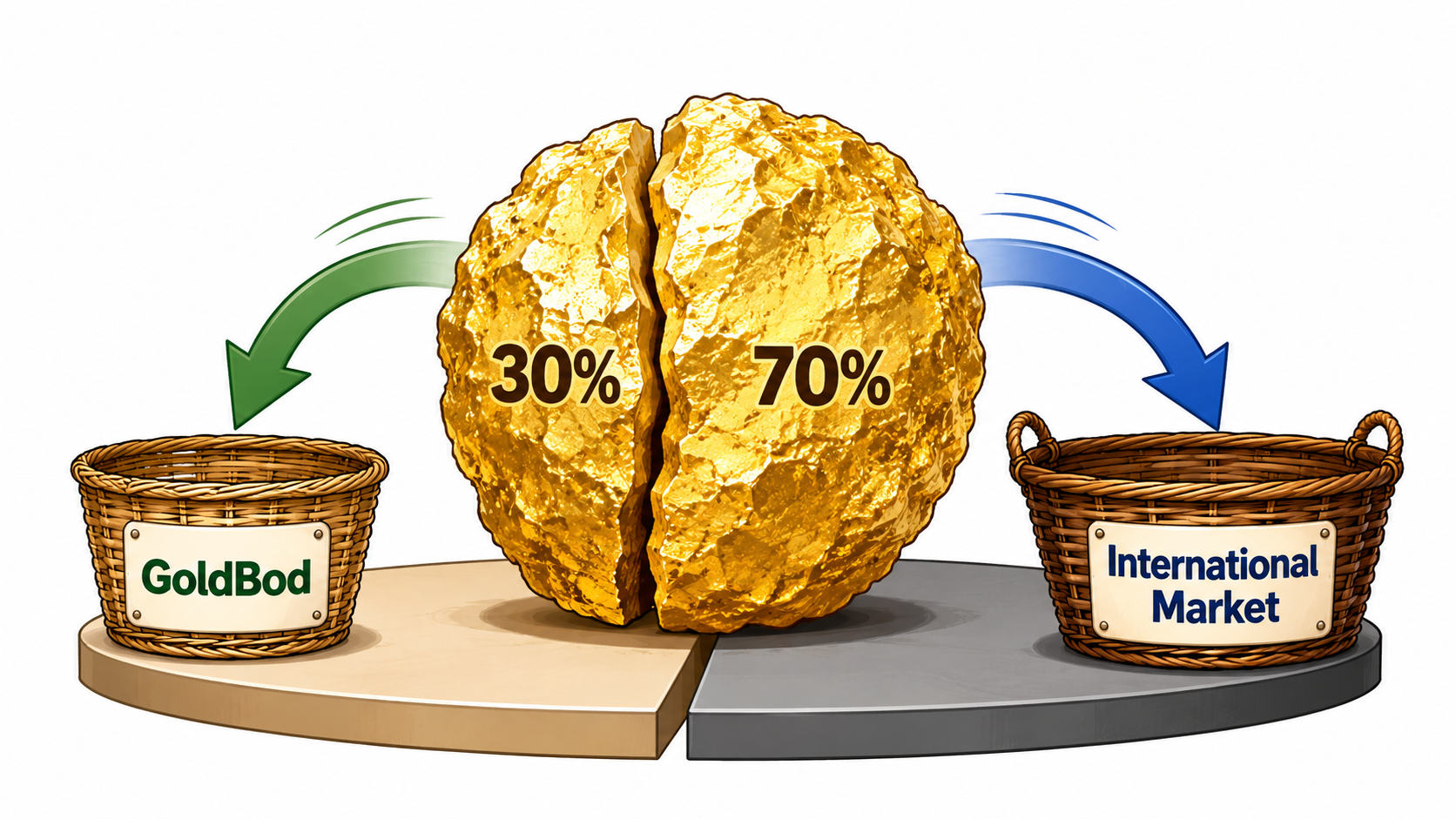
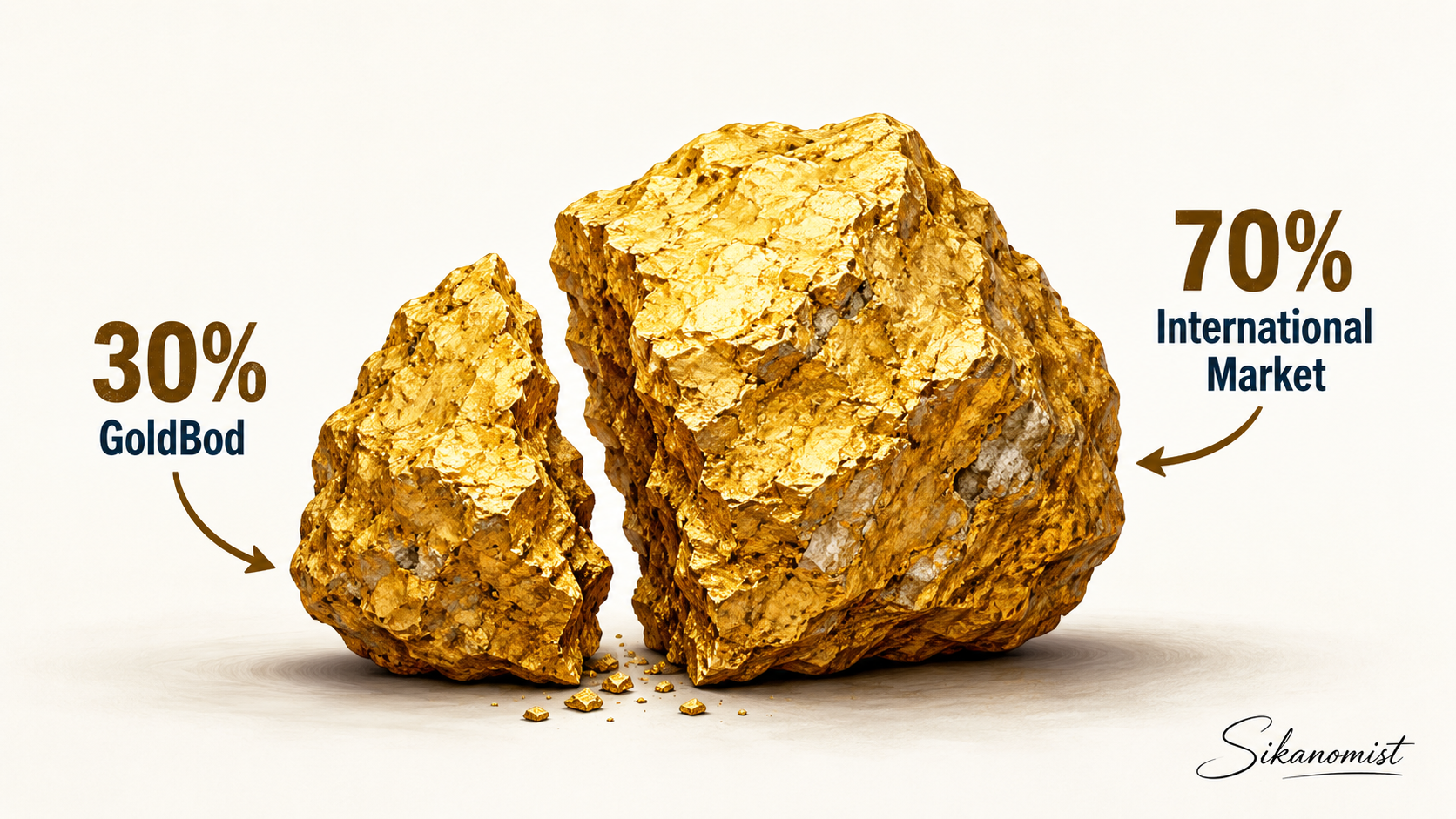
Ghana has taken a major step in its attempt to keep more value from its mineral wealth at home. Through the Ghana Gold Board, working under the joint direction of the Minister of Finance and the Minister for Lands and Natural Resources, the Government has reached a landmark agreement with the Ghana Chamber of Mines to purchase 30% of the gold output of all large-scale mining companies operating in the country.
The agreement, which takes effect from 1st July 2026, means that large-scale mining companies will sell 30% of their gold output locally to the GoldBod in doré form. Doré gold is not fully refined. It is a semi-processed form of gold that still requires further refining before it can meet international market standards. Under the new arrangement, the gold will be bought in Ghana cedis, using the Bank of Ghana Reference Rate, and at a discount of 0.55%.
This is a significant shift from the previous 2022 arrangement between the Bank of Ghana and the Ghana Chamber of Mines. The new approach places greater emphasis on local purchase, local refining, national reserve building and Ghana’s long-term ambition to stop exporting raw minerals without adding value.
For decades, Ghana has been known as one of Africa’s leading gold producers. Yet the country has often gained less than it should from this precious resource. Gold leaves the land, but too little of the refining, pricing power, reserve strength, industrial development and financial benefit remains in Ghana. This new agreement is therefore not just about buying gold. It is about correcting a historic weakness in the structure of Ghana’s natural resource economy.
One of the most important aims of the deal is to help Ghana achieve London Bullion Market Association accreditation for at least one local gold refinery by 2030. LBMA accreditation is important because it gives international recognition to refined gold. Without it, Ghana may mine gold, but still depend heavily on foreign refineries and external systems to validate, stamp and move its gold into the highest levels of the global market.
If Ghana can achieve this accreditation, it will mark a major national achievement. It would mean that the country is not only a producer of gold, but also a recognised centre for refining and processing it. That can support jobs, build technical skills, improve trust in Ghana’s gold industry and attract further investment into mineral processing.
The plan is that all doré gold bought by the GoldBod will be refined locally first. It will then be shipped to an LBMA refinery for melting and stamping before being delivered to the Bank of Ghana as part of the country’s gold reserves. This may sound technical, but the national meaning is simple: Ghana wants to use part of the gold produced on its soil to strengthen its own financial position.
The agreement also supports the Ghana Accelerated National Reserve Accumulation Programme, known as GANRAP. The target is to build Ghana’s foreign reserves to 15 months of import cover by the end of 2028. For an import-dependent country like Ghana, stronger reserves matter. They help protect the cedi, support investor confidence, reduce panic in times of global pressure and give the country more room to manage external shocks.
When a country has weak reserves, it becomes vulnerable. It struggles to defend its currency, pay for essential imports, manage debt pressures and maintain economic confidence. But when reserves are stronger, the economy gains breathing space. A stronger reserve position does not solve every problem, but it gives the country a firmer foundation.
President Mahama’s stated vision of achieving zero raw mineral exports by 2030 is also important in this discussion. For Ghana, the problem has never been the absence of natural wealth. The deeper problem has been the export of raw value. Gold, cocoa, bauxite, manganese and other resources have too often left the country with limited processing, limited industrial linkages and limited transformation of local communities.
A country that exports raw materials and imports finished goods will always struggle to build deep prosperity. It may earn foreign exchange, but it loses the bigger value created through refining, manufacturing, branding, logistics, technology, skilled labour and global market control. This is why the gold deal must be seen as part of a bigger national question: can Ghana finally move from extraction to transformation?
However, the success of this policy will depend on implementation. It is not enough to announce a bold agreement. Ghana must make sure the system is transparent, efficient and professionally managed. The GoldBod must be able to buy gold on time, pay fairly, track volumes properly, prevent leakages and work with mining companies in a way that builds confidence rather than confusion.
There must also be strong public accountability. Ghanaians deserve to know how much gold is being bought, how much is being refined locally, how much is being added to reserves, and how the arrangement is improving the economy. In a country where public trust in institutions is often fragile, transparency will be critical.
The discount of 0.55% may look small, but at large gold volumes, it can become meaningful. Government must explain clearly how this discount benefits the nation and how the overall pricing arrangement protects both Ghana’s interest and the stability of the mining sector. The mining companies, for their part, must also recognise that operating in Ghana should not only mean extracting wealth, but contributing to long-term national value.
This agreement could also open opportunities for Ghanaian professionals. Refining gold locally requires engineers, metallurgists, technicians, compliance officers, laboratory specialists, security systems, logistics experts and financial professionals. If properly developed, the policy can create a new chain of skilled work around the gold economy.
The most powerful part of this arrangement is not only the gold itself, but the possibility of building an industrial ecosystem around it. A serious gold economy should not end at mining. It should include refining, assaying, vaulting, jewellery production, export services, financial products, training institutions and strong regulatory systems. Ghana has the gold. The next challenge is to build the full economy around the gold.
Still, the country must be careful. State-led mineral policies can fail when they become too political, too secretive or too weak in execution. Ghana must avoid using this policy as a slogan. It must become a disciplined national project. The goal should not be to create another bureaucracy, but to build a stronger national asset.
The agreement also raises a bigger lesson for Ghana’s development. Natural resources alone do not make a country rich. What makes a country rich is the ability to organise its resources into productive systems. Gold under the ground is wealth in potential. Gold refined, certified, stored, traded and used to support reserves is wealth in action.
If Ghana gets this right, the new gold deal could become one of the important economic turning points of the decade. It could help strengthen the cedi, deepen reserves, support local refining, create skilled jobs and move the country closer to the dream of ending raw mineral exports.
But if it is poorly managed, it could become another promising policy that fails to change the lives of ordinary people. The difference will be discipline, transparency, competence and national seriousness.
Ghana has mined gold for generations. The real question now is whether Ghana can finally build a modern gold economy that works not only for mining companies and government accounts, but also for workers, communities, young professionals, local industry and the future of the nation.
This agreement is a beginning. What matters next is whether Ghana can turn gold from a mined resource into a national development engine.
Reader’s question:
Can Ghana finally use its gold to build a stronger economy, instead of only exporting wealth from the ground?