Jason Arday Is Gone. Ghanaians Abroad Must Learn to Stand Closer
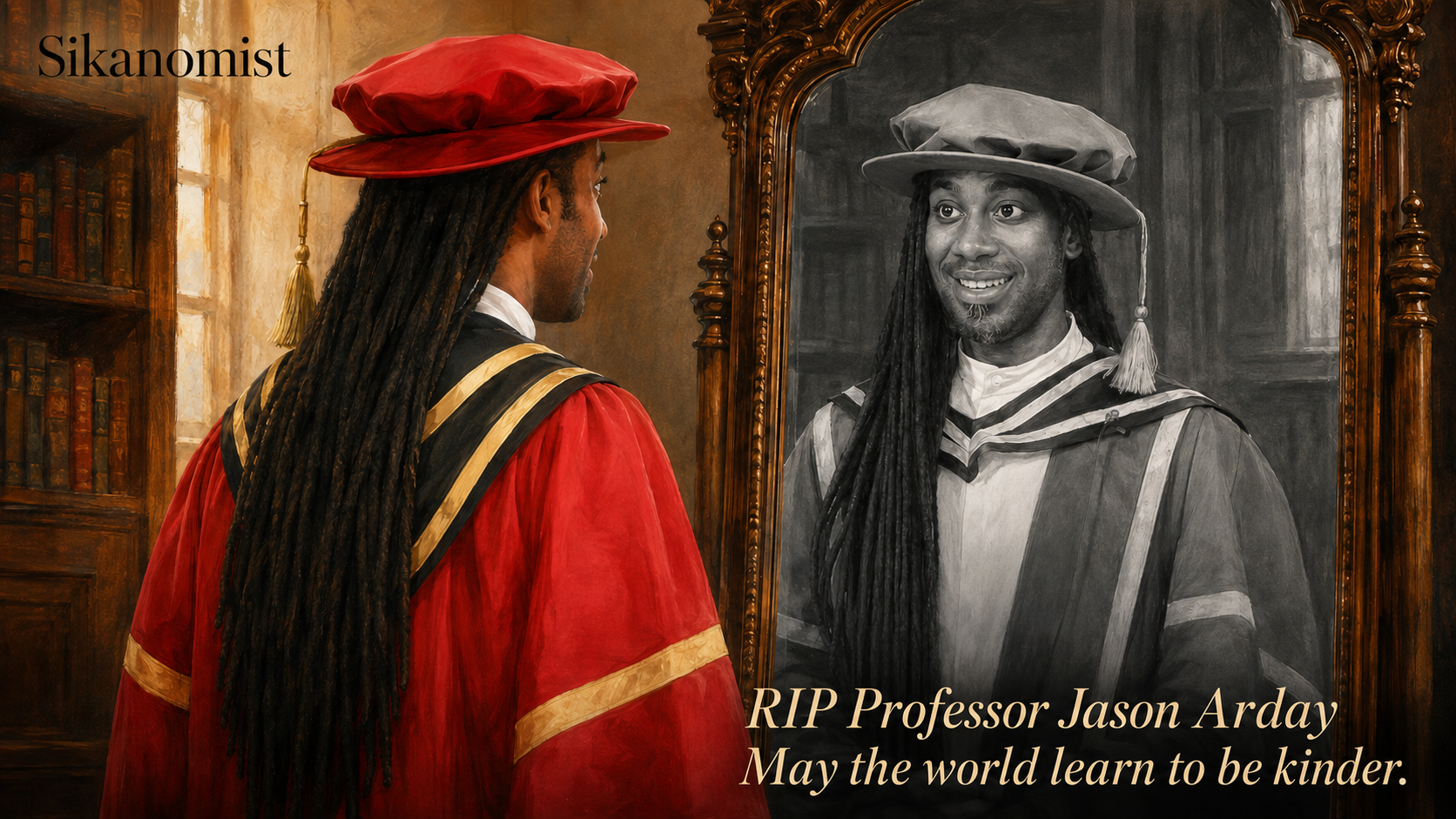
Solidarity must not mean concealing wrongdoing. It must mean ensuring that no Ghanaian or Ghanaian descendant faces public crisis, correction and rebuilding alone.
Professor Jason Arday’s story should matter deeply to Ghanaians everywhere.
He was born and raised in South London by Ghanaian parents. His mother, Gifty Arday, worked as a mental health nurse and was active in anti-racism campaigns. His father, Joseph Arday, worked as a chef. Together, they raised their children while navigating the financial, cultural and social challenges familiar to many immigrant families.
Jason was diagnosed with autism and global developmental delay as a child. He did not speak until he was about 11 and learnt to read and write in his late teens. Yet he rose through education and eventually became Cambridge University’s youngest Black professor—a remarkable achievement that brought pride to many people of African heritage.
Then the story changed.
Questions were raised about parts of his academic work, qualifications, professional appointments, charity activities and public life story. He was accused of plagiarism and embellishment. Jason denied deliberate plagiarism but acknowledged making mistakes. Liverpool John Moores University had previously cleared him of wrongdoing, while Cambridge announced further investigations into his appointment and tenure. He resigned from Cambridge on 5 August 2026, saying the relentless accusations and public commentary had taken a profound toll on him and those he loved.
On 14 August, he was found dead in London at the age of 41. British police described his death as unexpected but said it was not being treated as suspicious. No responsible person should claim to know, without official evidence, precisely what caused his death. But it is publicly known that he was experiencing considerable distress. A Cambridge colleague who spoke with him shortly before his death said he was struggling with the loss of his career and reputation. Reuters reported the circumstances and the call for reflection.
His family said he had endured years of misinformation, abuse and harassment. They asked the press to leave the family alone and allow them to grieve. Their statement was published by The Independent.
Jason is gone. But thousands of other Ghanaians and Ghanaian descendants are studying, working, building businesses and trying to establish themselves abroad. Some will succeed publicly. Some will make serious mistakes. Some will be accused unfairly. Others may be accused with justification. Many will experience periods in which the institutions that once celebrated them suddenly become cold, distant or hostile.
The lesson is not that Ghanaians must defend every Ghanaian against every allegation. The lesson is that we must learn how to remain present when one of our own is in trouble.
We celebrate success better than we manage crisis
Ghanaian communities abroad are often good at celebrating achievement.
When someone becomes a professor, doctor, mayor, footballer, business executive or senior public official, the photographs circulate quickly. We proudly mention the person’s hometown, family name, school or Ghanaian heritage. We organise congratulatory events and describe the success as evidence of what Ghanaians can accomplish abroad.
But what happens when the celebration becomes controversy?
What happens when the person is accused of misconduct, loses a position, experiences a mental health crisis or becomes the subject of relentless public criticism?
Too often, the community quietly withdraws. People fear that association with the troubled person will damage their own reputations. Friends stop calling. Professional colleagues become cautious. Community leaders wait for the controversy to pass. Some join the public condemnation because they do not want to appear defensive.
The individual who once seemed surrounded by admirers can suddenly find himself or herself almost alone.
We do not know everything that Jason’s relatives, friends, colleagues or community did privately to support him. It would be unfair to declare that nobody tried. But his story gives Ghanaians abroad an opportunity to ask an uncomfortable question: are our communities organised well enough to support people when their lives begin to unravel?
Family love is essential, but families cannot carry every crisis alone. A person facing international media scrutiny, professional investigations and reputational collapse may need experienced lawyers, mental health professionals, communications advisers, mentors, religious leaders and trusted friends working together.
That kind of support cannot be improvised after the crisis has already exploded.
Support does not mean pretending someone is innocent
There is an important distinction between solidarity and concealment.
Supporting a Ghanaian who has been accused of wrongdoing must not mean attacking every critic, suppressing legitimate questions or declaring the person innocent before the evidence is examined. Blind defence can worsen a crisis. It can encourage denial, delay correction and turn an individual case into a racial or national confrontation.
At the same time, accountability must never become abandonment.
A person can be wrong and still need help. A person can make a serious mistake and still deserve human dignity. A person can be asked to admit wrongdoing without being treated as though his or her entire life has become worthless.
True community is strong enough to say:
Pause. Tell us the truth. Correct what must be corrected. Apologise where an apology is necessary. Accept the consequences. Get professional help. Then let us work out how you can rebuild.
That is not protecting wrongdoing. It is protecting the possibility of repentance, recovery and restoration.
Public life increasingly allows little room between hero and villain. Social media can turn allegations into permanent identities within hours. Once a person becomes the subject of a scandal, every achievement may be questioned, every mistake enlarged and every explanation dismissed as another deception.
Communities must not copy this cruelty.
We can insist on truth without participating in humiliation. We can respect investigations without turning allegations into entertainment. We can condemn misconduct without joining a campaign to destroy the whole person.
Ghanaian identity must become a practical network
Ghanaian identity abroad is often expressed through food, festivals, funerals, churches, hometown associations and national celebrations. These institutions preserve culture and provide an important sense of belonging.
But belonging must also become practical.
A Ghanaian experiencing a severe professional or personal crisis should know where to turn before the situation becomes unbearable. Diaspora associations should develop confidential welfare systems that connect people to appropriate professional assistance.
This could include:
A trusted welfare contact within major Ghanaian associations.
A directory of Ghanaian and Ghana-friendly lawyers, counsellors, doctors, academics, journalists and crisis-communications professionals.
Emergency support teams that can assess whether a person needs legal advice, medical care, mental health assistance or immediate protection.
Confidential mentoring for students and professionals facing disciplinary proceedings.
Support for spouses, children and parents who may also be affected by a public controversy.
A pathway for people who admit wrongdoing to apologise, make corrections and rebuild their lives.
Such systems should not be controlled only by prominent personalities. They must include trained professionals, clear confidentiality rules and the ability to act quickly.
When a Ghanaian abroad is placed under intense public scrutiny, the first community response should not be gossip. It should be contact:
Are you safe? Is your family safe? Do you have a lawyer? Do you have somebody with you? Have you spoken to a mental health professional? What facts must be clarified? What mistakes must be acknowledged? What help do you need today?
These questions can save careers, families and possibly lives.
Institutions must also examine their responsibility
Jason Arday’s case was not only about one academic. It also raised questions about the institutions that appointed, promoted, celebrated and later investigated him.
Cambridge had presented his appointment in 2023 as a historic moment. When questions intensified, the university announced reviews of its appointment processes and his tenure. The investigations were legitimate institutional responsibilities. But institutions also have a duty of care towards people placed under enormous pressure.
An institution cannot build a public symbol around an individual and then behave as though that individual is entirely alone when the symbol becomes controversial.
Appointment procedures must be rigorous from the beginning. Qualifications should be checked carefully. Academic work should be evaluated consistently. Support must be available when concerns are raised. Investigations should be firm, independent and fair—but they should also avoid unnecessary public spectacle.
This balance is especially important for people from minority backgrounds. The mistakes of one Black academic are too easily presented as evidence against diversity itself. In reporting before Jason’s death, Black academics warned that his individual case was being used to question whether Black scholars belonged in leading institutions at all. Some argued that legitimate accountability had become entangled with racial hostility and wider opposition to diversity.
That is unfair to Jason, unfair to other Black academics and harmful to institutional integrity.
A Ghanaian or Black professional must be allowed to be an individual. His achievements should not make him responsible for proving the worth of an entire race. His mistakes should not be used to discredit every other person who looks like him.
We must support people before they become famous
There is another lesson in the lives of Gifty and Joseph Arday.
Long before Cambridge, headlines and public recognition, Jason was a Ghanaian child in South London facing substantial developmental and educational difficulties. His parents invested years of work, care and belief in him. In his doctoral thesis, Jason thanked Gifty and Joseph for the sacrifices they made and especially acknowledged his mother’s support with his learning difficulties. His thesis identifies both parents by name, while an earlier profile described their Ghanaian immigrant household and occupations. The 2023 profile appears in The Guardian.
Their commitment reminds us that extraordinary achievement usually begins with somebody providing ordinary support consistently.
Ghanaian communities should not wait until a child reaches Cambridge before embracing him. We must identify and support Ghanaian children abroad who are autistic, disabled, struggling academically, experiencing discrimination or growing up in financially difficult households.
Their parents also need support. Immigrant parents frequently carry demanding jobs, high living costs, cultural pressures and responsibilities to relatives in Ghana. Raising a child with additional needs can make that burden even heavier.
A connected diaspora should provide mentoring, educational guidance, professional referrals, emergency assistance and simple companionship to such families.
We need a culture of restoration
Every strong community needs a way to deal with failure.
Our current public culture is often built around only two responses: defence or destruction. We either insist that our person has done nothing wrong, or we distance ourselves completely.
There must be a third response: restoration through truth.
Restoration does not erase consequences. It begins with honesty. It allows a person to say, “I was wrong,” without believing that life is over. It creates room for correction, restitution, retraining, treatment and a new beginning.
Even when someone loses a prestigious title, that person remains a parent, child, sibling, friend and human being. A career can end without a life losing its value. A reputation can collapse without the community declaring the person disposable.
This is the message Ghanaians abroad must carry into our professional associations, churches, alumni groups, hometown unions and family networks.
We must be close enough to celebrate one another, close enough to correct one another and close enough to notice when somebody is no longer coping.
Jason’s story must change how we behave
We cannot now go back and rewrite Jason Arday’s final weeks. We cannot know whether a stronger Ghanaian network around him would have changed what happened. We must not turn speculation into fact or use his death to settle arguments that were unresolved during his life.
What we can do is learn.
Jason’s achievements should be remembered. The questions raised about his work should be examined honestly. The institutional failures surrounding his case should be investigated. The racial hostility that attached itself to the controversy should also be confronted.
But the most immediate lesson for Ghanaians abroad is human.
We must stop appearing only for the photographs of success.
We must be present in the hospital waiting room, the disciplinary hearing, the unemployment period, the mental health crisis, the family emergency and the difficult conversation in which someone must be told that he or she has made a serious mistake.
Sometimes support will mean defending a person against injustice. Sometimes it will mean helping that person admit the truth. Sometimes it will mean finding a lawyer, counsellor or doctor. Sometimes it will simply mean sitting beside someone whose public world is collapsing and reminding that person that a damaged reputation is not the end of human worth.
Jason Arday is gone. Gifty and Joseph Arday have lost a son. His partner has lost a companion. His children have lost a father. Friends, colleagues and students have lost someone they knew beyond the headlines.
The Ghanaian diaspora cannot change that loss.
But we can honour its warning by building communities in which nobody has to be perfect to remain connected, nobody has to face correction without compassion, and nobody becomes invisible simply because the applause has stopped.
Reader’s Question:
How can Ghanaian associations, churches and professional networks abroad create practical systems to support members facing personal, professional or mental health crises?