At 35, Kumasi Senior High Technical School Shows Ghana the Education It Need
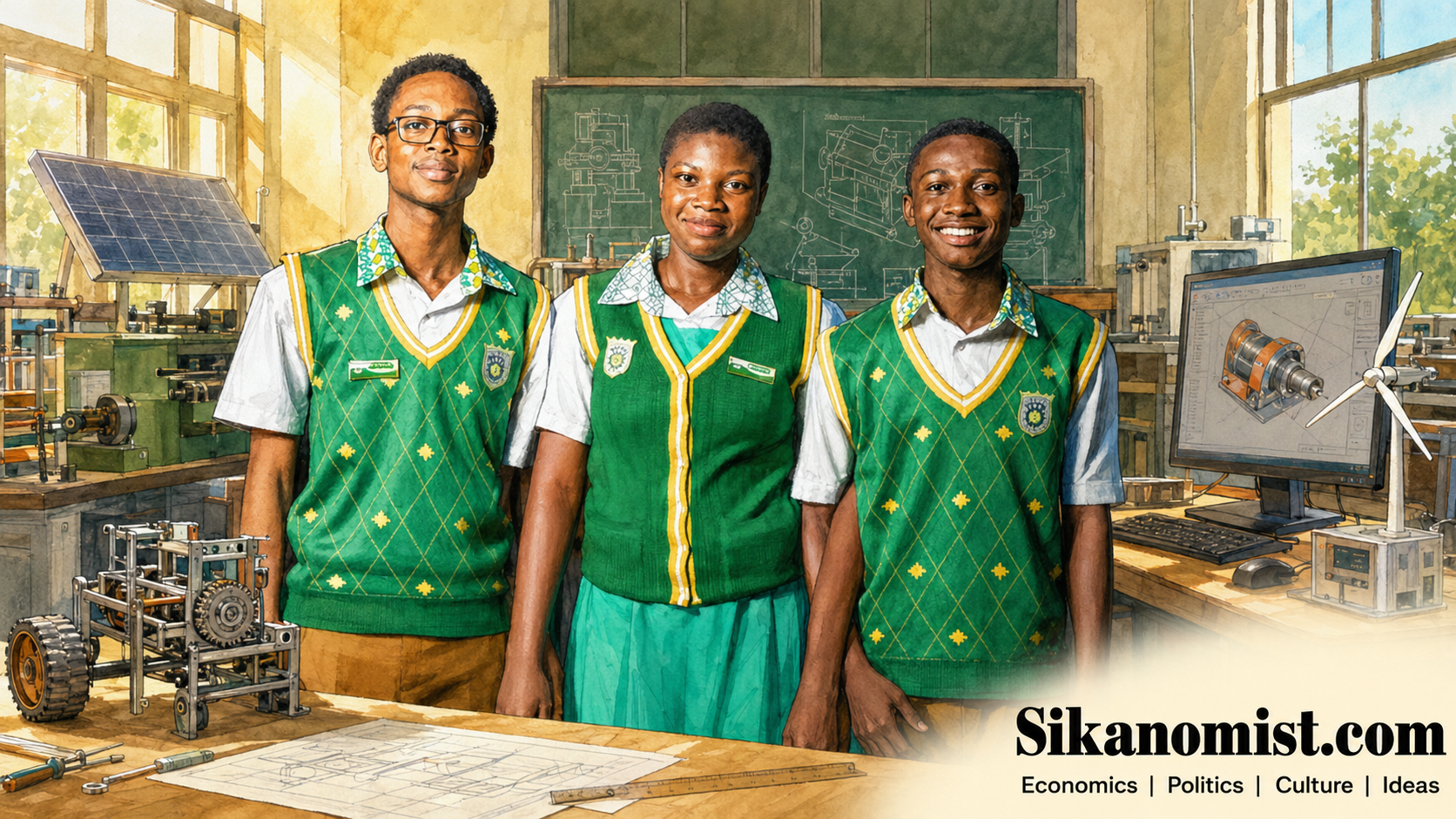
Thirty-five years may appear modest beside the long histories of Ghana’s oldest secondary schools. But an institution’s importance should not be measured only by its age. It should also be measured by the need it was created to meet, the lives it has shaped and the possibilities it continues to represent.
Kumasi Senior High Technical School, widely remembered by generations of old students as Kumasi Secondary Technical School, has reached that important point in its life.
Established in 1991 at Patasi in Kumasi, the co-educational school was among the 146 senior secondary schools opened during the educational reform programme of that period. Its creation reflected an important national ambition: secondary education should not be limited to traditional academic learning. It should also prepare young people to understand technology, work with their hands and apply knowledge to practical problems.
That ambition remains as relevant today as it was in 1991—perhaps even more relevant.
The school formally launched its 35th-anniversary celebration on 8 August 2026, following an alumni homecoming. The anniversary theme, “Honouring the Past, Equipping the Present and Engineering the Future through 21st-Century Secondary and Technical Education for Academic Excellence,” is more than ceremonial language.
It captures a difficult but necessary task facing both the school and Ghana: how to respect what has already been built while preparing students for a world that is changing rapidly.
A school born from national reform
Kumasi Senior High Technical School is part of the living history of Ghana’s attempt to widen access to secondary education and make it more relevant to national development.
It began as Kumasi Secondary Technical School and later became known as Kumasi Senior High Technical School following changes to Ghana’s secondary education structure.
From its campus at Patasi, the school has grown as a mixed day and boarding institution. Its programmes include technical studies alongside General Science, General Arts, Business, Home Economics and Visual Arts.
Its motto, “Recapturing True Values,” points to an educational purpose that goes beyond examination results. The school’s stated vision is to train students to use their “heads, hands and heart” so that they become useful to themselves and society.
Those three words—head, hands and heart—contain an entire philosophy of education.
The head represents knowledge, reasoning and intellectual discipline. The hands represent skill, workmanship and the ability to turn an idea into something useful. The heart represents character, responsibility and respect for society.
Ghana needs all three.
Academic knowledge without practical ability can leave graduates waiting for opportunities they have not been prepared to create. Technical ability without discipline and character can be misused. Character without knowledge and competence may be admirable, but it is insufficient for the demands of a modern economy.
Good education must bring the three together.
Technical education must not be treated as a second choice
For too long, technical education in Ghana has often been presented—sometimes indirectly—as an option for students who could not enter supposedly more prestigious academic programmes.
That attitude has harmed individuals and the country.
A nation cannot industrialise through theory alone. It needs people who can design, build, install, repair, manufacture, programme, maintain and improve the systems on which modern life depends.
Ghana needs electrical technicians, builders, machine operators, metalworkers, software developers, laboratory professionals, renewable-energy technicians, product designers and many other practically trained people.
These are not lesser occupations. They are the people who make an economy work.
Schools such as Kumasi Senior High Technical School should therefore sit at the centre of Ghana’s development strategy. Their technical identity should not exist merely in the school’s name or in a few ageing workshops.
It should be visible in modern laboratories, properly equipped workshops, strong industry partnerships, competent instructors and students who regularly solve real problems.
The anniversary must renew this identity. It should become an opportunity to ask whether the school has the equipment, facilities, teachers and industry connections required to deliver genuinely modern technical education.
A 21st-century technical school cannot train students adequately with 20th-century tools.
Progress worth recognising
The school’s journey includes visible signs of progress.
In 2020, an 18-unit classroom block was commissioned for the school, adding important teaching space. Its growing presence in the National Science and Maths Quiz has also given students a national platform on which to demonstrate confidence and academic ability.
In the 2025 competition, Kumasi Secondary Technical School won a closely contested preliminary-stage contest with 49 points and advanced to the one-eighth stage. The team later recorded a perfect 10 out of 10 in a Problem of the Day round during the one-eighth stage.
Those results matter not because a quiz alone defines a school, but because they challenge the belief that technical institutions must choose between practical education and academic excellence.
They should offer both.
KSHTS has also identified clean energy as an area in which its technical character can serve a practical purpose. Its interest in biogas and clean cookstoves points towards the kind of applied learning Ghana should encourage.
A school kitchen powered partly through a functioning biogas system, for example, can become more than infrastructure. It can be a living laboratory where students learn about energy conversion, sanitation, fabrication, maintenance, public health and environmental responsibility.
The future of technical education lies in such connections between the classroom and real life.
The next 35 years must be more ambitious
An anniversary should preserve memory, but it should not become trapped in nostalgia.
Old photographs, school songs, uniforms, stories and friendships are important because they remind a community where it began. Yet the most meaningful way to honour the founders, former heads, teachers, workers and students is to build an institution capable of serving the next generation better than it served the last.
For KSHTS, that could begin with a clear development plan for the years ahead.
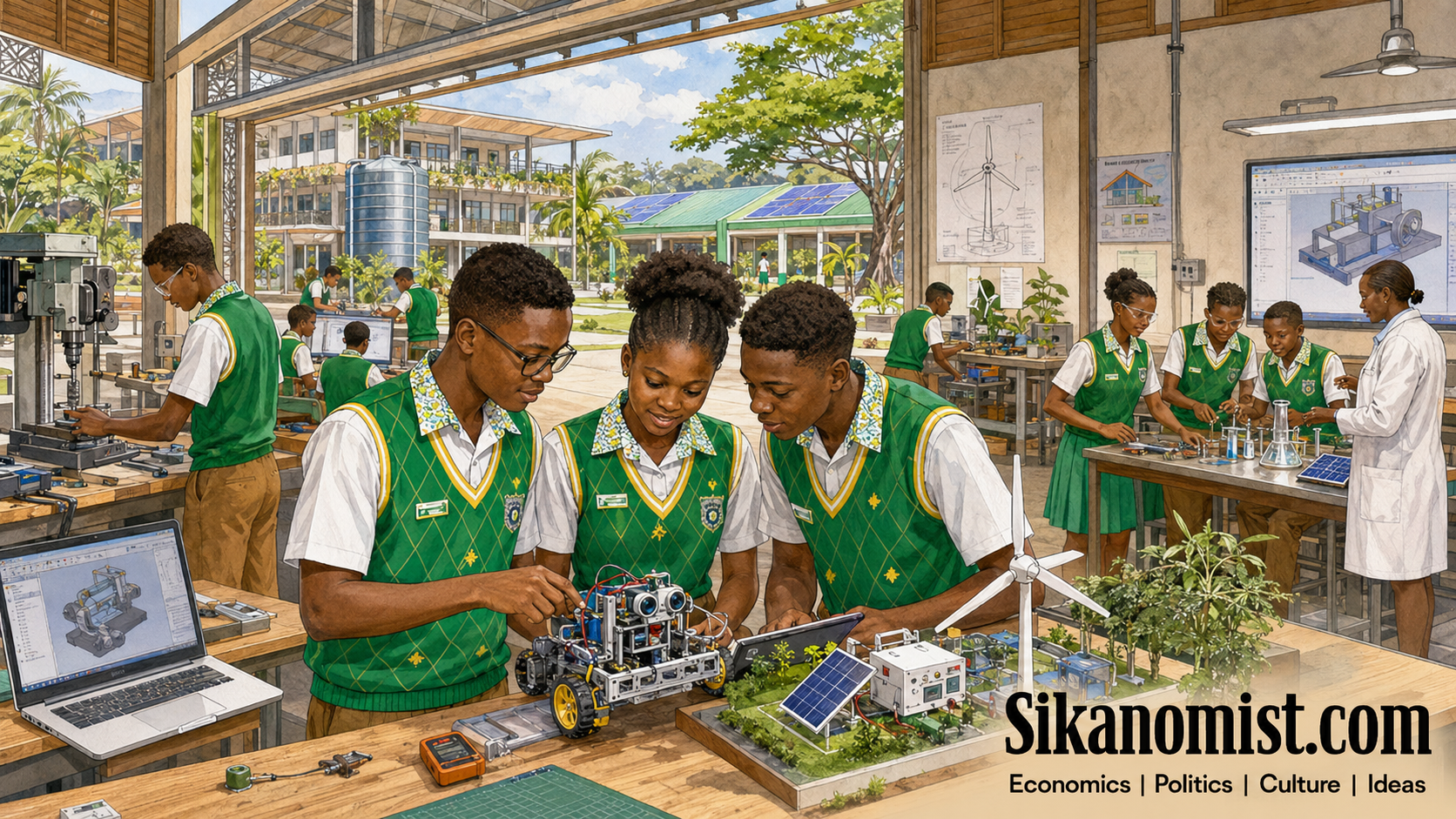
First, its technical workshops and laboratories should be audited and modernised. Students should encounter tools and systems that reflect current practice in construction, electrical installation, electronics, manufacturing, automotive technology, digital design and renewable energy.
Second, the school should establish structured partnerships with KNUST, Kumasi Technical University, technical institutes, engineering firms, construction companies, technology businesses and artisans of proven competence.
These partnerships could support mentorship, industrial visits, teacher development, equipment donations, student projects and internships during school holidays.
Third, entrepreneurship should be connected to technical training. Students should learn not only how to make or repair something, but also how to cost it, present it, protect its quality, manage customers and build a small enterprise around it.
Ghana does not need every young person to become an entrepreneur. However, every technically trained student should understand how value is created and exchanged.
Fourth, digital competence must run through every programme.
Technical drawing now exists beside computer-aided design. Machines increasingly involve sensors and software. Construction uses digital measurement and modelling. Commerce depends on digital payments and online communication. Even traditional trades are being transformed by technology.
The school must prepare students for this combination of physical and digital work.
Finally, student character must remain central.
The school’s motto should not be treated as decoration. “Recapturing True Values” must be reflected in punctuality, honesty, care for public property, respect for skilled work, responsible leadership and pride in doing a job properly.
Ghana’s development problem is not only a shortage of knowledge. It is also the failure, too often, to apply knowledge with discipline and integrity.
The alumni must become builders of the institution
The 35th anniversary is also a call to the old students—the Animuonyamfoɔ.
Homecoming should strengthen relationships, but its lasting value will depend on what those relationships build.
An alumni association can become one of the school’s most dependable development partners. Different year groups can combine their efforts around a few properly designed priorities rather than undertaking scattered projects with little long-term impact.
They can create an accountable development fund, support high-performing but financially disadvantaged students, equip a laboratory or workshop, establish a digital alumni directory and connect current students to mentors working in Ghana and abroad.
Old students in engineering, education, business, health, construction, public service, technology and the creative industries carry knowledge that can be returned to the school even when they cannot make large financial contributions.
A two-hour career session, a supervised practical project, a donated piece of equipment or an internship opportunity may change the direction of a student’s life.
The anniversary should therefore produce more than a successful ceremony. It should leave behind a stronger institution.
A lesson for Ghana
Kumasi Senior High Technical School’s 35th anniversary arrives at a time when Ghana is searching for jobs, industrial capacity and a more productive economy.
Public discussion often focuses on university access, examination results and the number of students enrolled in school. These things matter, but the country must ask a further question:
What are young people actually being prepared to do?
Education should help a young person to think clearly, behave responsibly and perform useful work. It should make the graduate more capable of solving problems in the household, the workplace, the community and the nation.
Technical education is not the only route to that outcome, but it is one of the most important.
This is why the success of KSHTS matters beyond Patasi and beyond Kumasi. The school represents a national idea that Ghana has still not fully developed: that academic learning and practical skill belong together.
At 35, Kumasi Senior High Technical School deserves congratulations. Its founders and pioneers deserve gratitude. Its teachers, non-teaching staff, students, parents and alumni deserve recognition for sustaining the institution through years of growth and difficulty.
But the greatest gift the school can receive is not praise alone. It is renewed investment in its purpose.
If KSHTS can modernise its facilities, deepen its technical identity, strengthen academic excellence, build serious partnerships and preserve the values expressed in its motto, its next 35 years can be even more consequential than its first.
The school was established during an era of reform. Its anniversary should now help inspire another: a Ghanaian education system that respects the head, trains the hands and forms the heart.
That would be a future worth engineering.

Reader’s Question
What practical investment should the government, alumni and private sector make to help Kumasi Senior High Technical School become a leading centre of 21st-century secondary and technical education?