Save the Ghana Medical Trust Fund from Political Branding
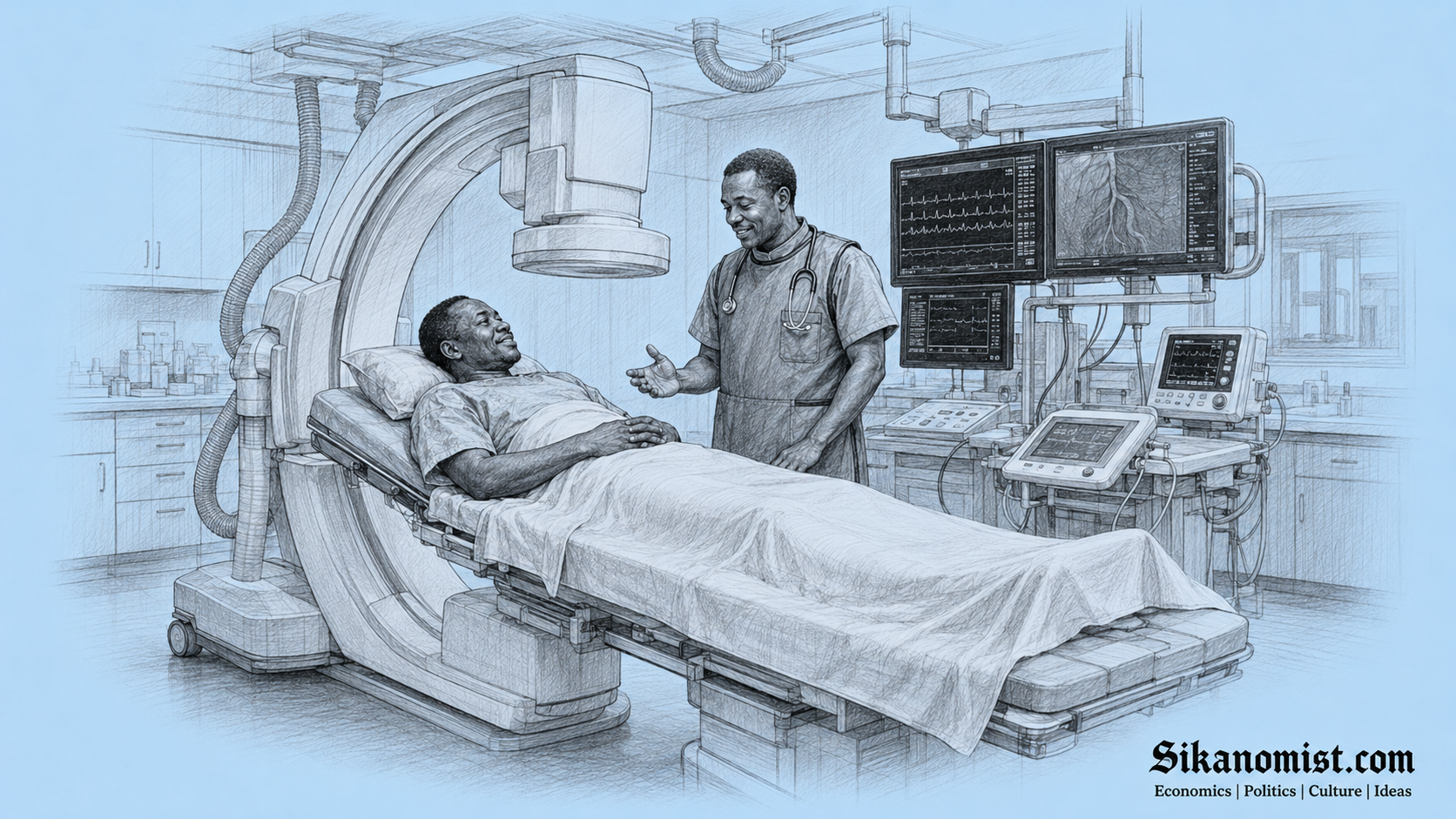
The Ghana Medical Trust Fund is a brilliant and potentially life-saving national initiative. President John Dramani Mahama deserves credit for creating it, but the “MahamaCares” nickname could make the Fund appear partisan and endanger its future. Ghana should retire the nickname now and allow the institution to belong visibly to every citizen.
The Ghana Medical Trust Fund may become one of the most important health interventions Ghana has established in recent years. It responds to a painful reality: a serious illness can destroy a family financially even before it takes a life.
When a Ghanaian is diagnosed with cancer, kidney failure, stroke, diabetes or a serious heart condition, the medical problem is often followed immediately by a money problem. Treatment can require expensive medicines, repeated tests, specialist procedures, travel and long periods away from work. The National Health Insurance Scheme remains essential, but it does not meet the full cost of many complex and long-term treatments.
Families therefore sell property, use business capital, borrow from friends, organise public appeals or simply postpone treatment. In the worst cases, patients die not because medicine has no answer, but because the answer is beyond their financial reach.
The Ghana Medical Trust Fund was created to help close this gap. It deserves national support.
However, the Fund is carrying a political danger that has nothing to do with medicine: the nickname “MahamaCares”. It may have been effective as a campaign message, but it is a threat to the long-term security of the institution.
President Mahama deserves full credit for championing the initiative. Yet the best way to honour that achievement is not to attach his name permanently to the Fund. It is to build an institution that continues saving Ghanaian lives long after he has left office.
That is why the nickname should be muted now.
A good idea built around a national need
The Ghana Medical Trust Fund is not merely a programme for paying individual hospital bills. It was established as a national statutory fund under the Ghana Medical Trust Fund Act, 2025 (Act 1144). Its purpose is to mobilise sustainable financing for specialised medical care for people living with chronic non-communicable diseases.
The Fund’s official mandate rests on four important pillars: financial support for eligible patients; investment in medical equipment and infrastructure; training for specialist doctors, nurses and other health professionals; and research into chronic diseases affecting Ghanaians.
This is a sensible approach because a strong health system requires more than money for today’s patient. It also needs the machines, buildings, trained professionals and knowledge that will help tomorrow’s patient.
Direct financial support can prevent families from losing everything while trying to keep a loved one alive. Investment in equipment and specialist facilities can reduce the need for costly treatment abroad. Training can build the skilled workforce needed to operate advanced equipment and deliver complex care. Medical research can help Ghana understand its disease patterns and develop better responses.
These benefits reach beyond the people who receive immediate support. When Ghana develops the capacity to diagnose and treat more complex conditions locally, the whole health system becomes stronger. Money that might have been spent on overseas treatment can remain within the national economy. Ghanaian specialists gain more experience, patients receive care closer to their families, and the pressure on the few specialist facilities in Accra can gradually be reduced.
The Fund therefore has the potential to become a permanent national shield against both medical suffering and financial ruin.
Early signs of practical action
Ghanaians have heard many fine policy promises that did not survive beyond speeches, launches and colourful banners. The Ghana Medical Trust Fund deserves praise because it has begun to move from promise to practical work.
Its most visible early achievement is the reconstructed and expanded Cardiac Catheterisation Laboratory at the National Cardiothoracic Centre of the Korle Bu Teaching Hospital.
The previous laboratory was destroyed by fire on 7 March 2025, severely disrupting critical cardiac procedures. The Fund assessed the facility in January 2026, reconstruction began in February, and the upgraded laboratory was inaugurated in July 2026.
A cardiac catheterisation laboratory is not a decorative project. It enables specialists to examine and treat serious heart and blood-vessel conditions, including procedures that can save patients during life-threatening emergencies.
Restoring this service means some patients can receive advanced treatment in Ghana rather than suffer dangerous delays or search for money to travel abroad.
The initiative is also helping to spread specialist heart care beyond Accra. Construction of a new cardiothoracic centre at Komfo Anokye Teaching Hospital has been progressing, while a cardiology centre at Tamale Teaching Hospital has also been under development.
Tamale Teaching Hospital has explained that its facility should bring critical services closer to patients in northern Ghana who currently travel long distances to Kumasi or Accra for care.
The Fund has also reported patient-support arrangements, health-facility assessments, plans for a digital application and claims system, investment in specialist training, and support for dialysis and other medical equipment in health facilities outside Accra.
There will be a need for independent evaluation as the Fund grows, but these early actions show that the initiative is capable of producing real benefits. It is laying a legal, administrative and physical foundation for better specialised healthcare.
That is exactly why Ghana must protect it from avoidable political risk.
“MahamaCares” was smart politics
There is no difficulty in understanding why the nickname was chosen. “Ghana Medical Trust Fund” is accurate but formal. “MahamaCares” is short, emotional and easy to remember. It connects the policy to the President who proposed it and communicates compassion in two words.
As political messaging, it was clever.
It helped citizens associate President Mahama with a response to the suffering caused by chronic diseases. It gave supporters an attractive slogan and made a complicated healthcare financing proposal easier to promote.
But a good campaign name is not necessarily a good institutional name.
Campaign communication is designed to win attention and political credit. Institution-building is designed to survive political change. The two objectives are not always compatible.
The election campaign is over. The Fund now has a law, a Board, management, public responsibilities and a long-term national purpose. It has entered a different stage of life.
Its identity must also mature.
Why the nickname is dangerous
The first danger is partisan ownership.
When a public programme carries the name of a sitting president, citizens can easily begin to see it as the property of that president and his party. Supporters may present every treatment, machine or hospital project as a personal gift from the leader.
Opponents may then feel compelled to attack or distance themselves from it, even when the underlying policy is good.
Healthcare should never be placed inside that political contest. Cancer does not ask which party a patient supports. Kidney failure does not check a voter’s party card. A heart attack does not wait to find out whether a family voted for the government or the opposition.
The second danger is what happens after a change of government.
Ghana has repeatedly suffered from the abandonment, renaming or neglect of public projects associated too closely with previous administrations. Incoming governments often want their own flagship programmes, colours, slogans and ceremonies.
Even when an earlier initiative is useful, its association with a political opponent can reduce the enthusiasm to finance, maintain or expand it.
The National House of Chiefs has publicly raised this concern. While describing the Fund as an excellent intervention and pledging its support, the House urged its managers to de-emphasise the “MahamaCares” nickname because of Ghana’s history of governments abandoning the projects of their predecessors.
The law can preserve the Fund’s legal existence, but legislation alone cannot guarantee political commitment. A future government will still influence appointments, budget allocations, administrative priorities and public communication.
If the Fund is widely regarded as a monument to a political rival, the temptation to weaken it may be greater.
The third danger is public misunderstanding.
The phrase “MahamaCares” can make a publicly supported statutory institution sound like the personal charity of President Mahama. That weakens public understanding of citizenship.
Ghanaians should not feel that they are receiving the personal kindness of a politician when they benefit from an institution supported by national resources. They should understand that the Republic has created a system to help citizens meet a serious health need.
The President provides leadership, but public institutions belong to the people.
The fourth danger is the possible politicisation of access.
Even if the Fund treats applicants fairly, a heavily political identity can create suspicion. Some citizens may wonder whether party supporters receive preference. Others may fear that applying for help associates them with the governing party.
Opposition politicians may question every beneficiary list, procurement decision or hospital project through a partisan lens.
Public confidence depends not only on fairness, but also on the appearance of fairness. A neutral national identity will help the Fund show that assistance is based on medical need and published eligibility rules—not political loyalty.
The fifth danger concerns national and external support.
The Fund will need cooperation from hospitals, specialists, traditional leaders, businesses, civil society, development partners, philanthropists and Ghanaians abroad.
Some potential supporters may hesitate if they believe their contribution will be used to promote a political personality or party.
A national name creates a larger tent. It allows people who do not support President Mahama politically to support the institution wholeheartedly.
A nickname can become stronger than the legal name
Defenders of the branding may argue that “MahamaCares” is only a nickname and that the official name remains the Ghana Medical Trust Fund.
This is legally correct, but it does not solve the problem.
The name most often repeated by officials, journalists, social-media pages, banners and the public becomes the institution’s real identity in everyday life. If the nickname is more visible and memorable than the statutory name, the public will continue to associate the Fund primarily with one politician.
The Fund’s own communications show how easily the two identities can become joined. The official website uses the words “Ghana Medical Trust Fund (MahamaCares)” in several places. Such repeated pairing prevents the statutory name from standing independently.
If the nickname is genuinely unnecessary to the Fund’s legal identity, then retiring it should not be difficult.
And if it has become too important to retire, that itself proves that it is no longer “only a nickname”.
President Mahama will not lose the credit
Removing the political nickname does not mean denying President Mahama his achievement. Ghana must learn to separate historical credit from institutional ownership.
President John Agyekum Kufuor receives due credit for establishing the National Health Insurance Scheme. His name did not have to become part of the Scheme’s title for history to remember his role.
The NHIS has survived changes of government partly because it developed a national identity that every administration could continue without publicly promoting a political opponent’s name.
The same should happen with the Ghana Medical Trust Fund.
If the Fund saves lives for the next thirty or fifty years, history will remember that it was established under President Mahama. Every functioning cardiac facility, every specialist trained and every family protected from financial ruin will strengthen his legacy far more than a slogan can.
A name on a banner may last for a political term. A strong institution can become part of a nation’s history.
President Mahama would therefore demonstrate confidence and statesmanship by asking officials, party communicators and Fund managers to let “MahamaCares” fade.
Such a decision would send a powerful message: the initiative began with his leadership, but its future belongs to Ghana.
How to correct the problem now
The solution does not require a new law, the destruction of useful materials or an expensive national rebranding exercise. Parliament has already provided the right name: the Ghana Medical Trust Fund.
The government and the Fund can take several simple steps.
First, all official communication should lead with “Ghana Medical Trust Fund” and stop placing “MahamaCares” beside it. The website, application platform, hospital signage, press releases, speeches, social-media accounts and public education materials should consistently use the statutory name.
Second, ministers, presidential staff, Fund officials and party communicators should be encouraged to stop using the nickname.
The transition can be gradual, respectful and quiet. There is no need for a dramatic announcement that creates another political argument. The country can simply allow the national name to become the familiar name.
Third, the Fund’s visual identity should use neutral national symbols and colours rather than the colours, photographs or slogans associated with any party or politician.
Its communication should focus on patients, health professionals, eligibility rules, facilities and measurable results.
Fourth, the government should invite all political parties represented in Parliament, health professional bodies, traditional leaders, patient groups and civil-society organisations to support a national continuity agreement around the Fund.
The aim should be a shared commitment that no future administration will abolish, starve or politicise a functioning life-saving institution.
Fifth, public education should explain clearly that the Fund complements rather than replaces the NHIS. Citizens must know who qualifies, which treatments are covered, how clinicians submit applications, how decisions are made and where complaints can be reported.
The correction must therefore be bigger than a change of wording. The name should be supported by national behaviour.
A national identity must be matched by accountability
Retiring the nickname will reduce one political danger, but it will not automatically guarantee success. The Fund must also earn public trust through transparency, fairness and consistent performance.
It should publish regular reports showing the money it receives, the number and regional distribution of patients supported, the types of conditions treated, the accredited providers paid, the equipment purchased, the projects completed and the health outcomes achieved.
Its accounts and procurement decisions must be audited and made accessible to the public.
The rules for patient support must be clear enough to prevent political influence and flexible enough to respond to genuine emergencies. Decisions should be led by medical evidence, financial need and transparent criteria.
No minister, party official, chief or wealthy individual should be able to move a preferred applicant ahead of a more urgent patient.
The Fund must also plan for maintenance. Ghana has commissioned expensive medical equipment in the past only to see it fail because spare parts, servicing, consumables, electricity requirements and trained operators were not considered properly.
A completed catheterisation laboratory is not the final achievement. The real achievement is a laboratory that remains staffed, supplied, affordable and operational year after year.
There must also be careful coordination with the NHIS so that public money is used efficiently, responsibilities are not duplicated and patients are not pushed between institutions.
The Trust Fund should fill critical gaps while helping the wider health-financing system become stronger.
These safeguards will make it more difficult for any future government to dismantle the Fund. An institution with transparent accounts, demonstrable results, nationwide beneficiaries and broad public support is far safer than one protected mainly by a political slogan.
Mute the nickname before it becomes the institution
The Ghana Medical Trust Fund is too important to become another item in Ghana’s endless contest between political parties.
Its purpose is deeply human: to help people live, to prevent illness from destroying families and to strengthen Ghana’s ability to provide specialist care at home.
President Mahama deserves praise for recognising the need and turning the idea into a statutory institution. The Board, management, health professionals and public officials responsible for its early work also deserve credit.
But good leadership includes knowing when to release a useful initiative from the personality of its founder.
“MahamaCares” may have helped introduce the idea. It should not be allowed to define its future. The longer the nickname remains in official use, the more difficult it will be to separate the Fund from party politics.
Ghana should act while the institution is still young and while the correction is easy.
Let the political nickname fade. Let the statutory name lead. Let every government feel obliged to strengthen it, and let every Ghanaian feel that it belongs to them.
The Ghana Medical Trust Fund can become one of President Mahama’s finest legacies. To save that legacy, Ghana must make the Fund bigger than Mahama.
It was established under his leadership. It must now be allowed to belong to the Republic.
Reader’s Question
Should the “MahamaCares” nickname be retired so that the Ghana Medical Trust Fund can become a truly national institution that survives every change of government?