Seven Prime Ministers in Ten Years: Will Britain Give Andy Burnham a Chance?
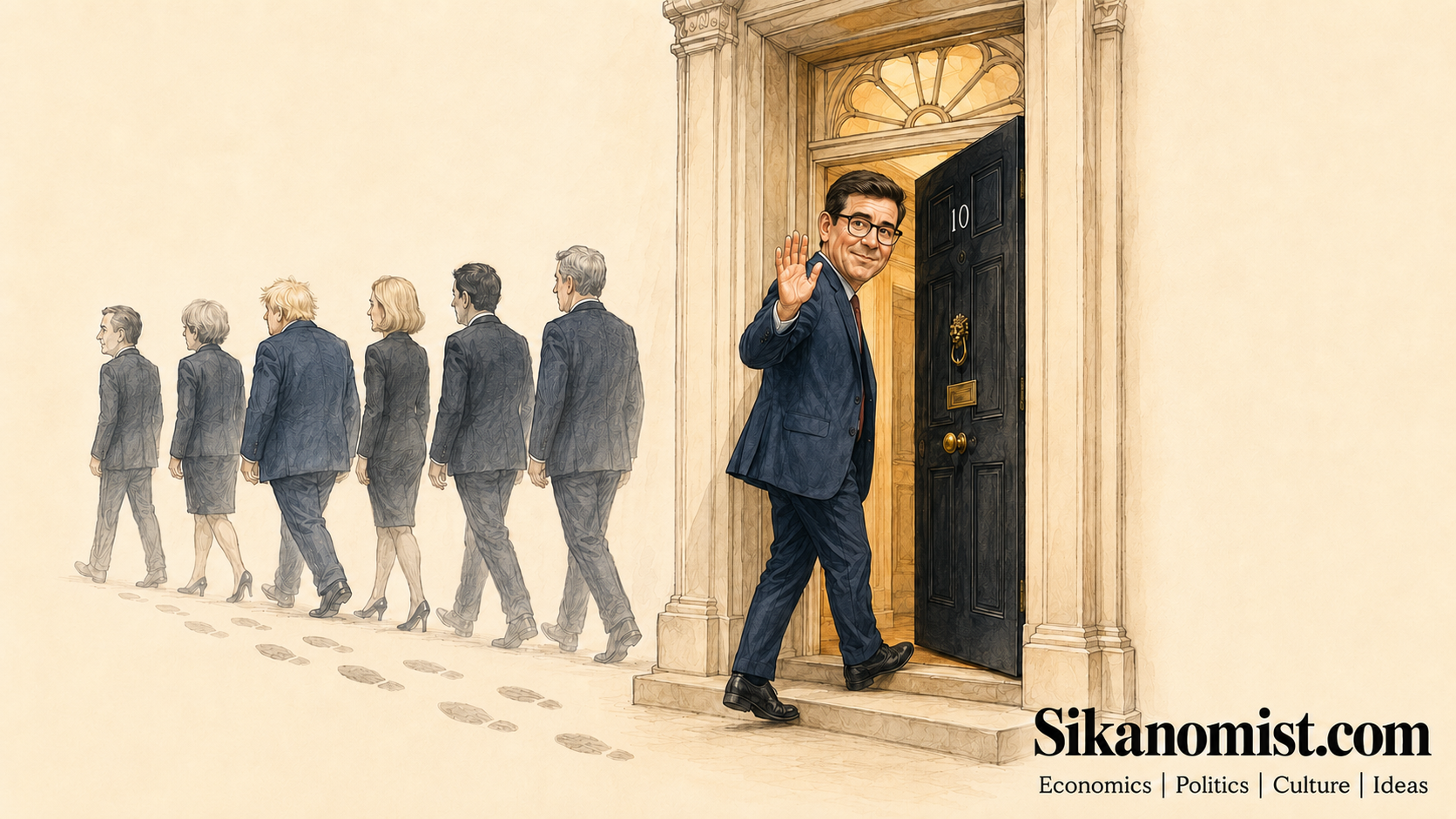
Andy Burnham enters 10 Downing Street as six former prime ministers depart, symbolising Britain’s hope for stability.
On 20 July 2026, Andy Burnham stood outside 10 Downing Street and promised to bring hope back to Britain. His arrival represented more than another change of government personnel. He became the seventh person to serve as British Prime Minister within ten turbulent years.
The sequence tells its own story: David Cameron, Theresa May, Boris Johnson, Liz Truss, Rishi Sunak, Keir Starmer and now Andy Burnham. Some were defeated by elections, others by internal party rebellions, policy failures or personal controversies. Together, their departures reveal a country that has struggled to find political stability since the Brexit referendum of 2016.
Burnham formally became Prime Minister after meeting King Charles III, following his election as Labour leader and the resignation of Sir Keir Starmer. In his first Downing Street address, he spoke about restoring hope, easing the cost-of-living crisis, rebuilding British industry and returning more power to local communities. The British government officially confirmed his appointment and published his first speech.
But Britain has heard promises of renewal before. The important question is whether the country—and Burnham’s own Labour Party—will give him enough time, political space and public patience to turn those promises into measurable progress.
Seven leaders, one unsettled decade
David Cameron began the decade in Downing Street but resigned after losing the 2016 referendum on Britain’s membership of the European Union. Theresa May succeeded him and attempted to negotiate Britain’s departure from the EU, but parliamentary divisions eventually overwhelmed her government.
Boris Johnson arrived with a powerful promise to “get Brexit done” and won a large parliamentary majority in 2019. However, controversies surrounding his conduct, including gatherings held during COVID-19 restrictions, weakened public and political confidence in his leadership.
Liz Truss followed Johnson but remained Prime Minister for only 49 days. Her government’s economic programme unsettled financial markets, weakened the pound and forced an embarrassing reversal of policy. Her premiership became an unforgettable example of how quickly political ambition can collapse when it loses economic credibility.
Rishi Sunak entered Downing Street promising competence and stability. Yet he inherited a country facing weak growth, strained public services, high living costs and widespread frustration. His Conservative government was defeated by Labour in the 2024 general election.
Keir Starmer arrived with a commanding parliamentary majority and the expectation that Britain’s period of political disorder might finally be over. But less than two years later, internal pressure, public dissatisfaction and declining confidence brought his premiership to an early end. He announced his resignation on 22 June 2026, and Burnham subsequently won the Labour leadership. The Council on Foreign Relations traces how political division, economic instability and scandal contributed to this extraordinary succession.
This pattern matters because frequent changes at the top can damage more than the careers of politicians. They can interrupt policies, delay investment, weaken international confidence and leave public institutions constantly adjusting to new priorities.
A country cannot build for ten years when its political leadership is repeatedly consumed by surviving the next ten weeks.
Burnham arrives with a different political story
Andy Burnham is not completely new to national politics. He previously served as Health Secretary, Culture Secretary and Chief Secretary to the Treasury. However, much of his recent public identity was built outside Westminster during his years as Mayor of Greater Manchester.
That experience may prove to be his greatest political advantage.
As mayor, Burnham became associated with regional devolution, public control of bus services and a more visible, practical style of government. He often presented himself as a politician willing to challenge the concentration of power in London and speak for communities that felt ignored by Westminster.
His message as Prime Minister appears to carry the same emphasis. Burnham has promised a ten-year national strategy based on economic renewal, stronger local government, industrial development and greater investment in communities. He has also placed the cost of living and homelessness among his immediate priorities.
His government announced an additional £340 million towards efforts to end rough sleeping, while his broader economic message includes reindustrialisation, infrastructure investment and the transfer of more authority to local areas. The government says the programme will build on Burnham’s first-day commitment to confront rough sleeping.
These ambitions will appeal to many British citizens who believe too much economic opportunity, investment and political attention have been concentrated in London and the south-east of England.
However, turning a successful regional political identity into a successful national government will not be easy.
The economy will determine his future
Burnham may speak about hope, fairness and national renewal, but the survival of his government will depend heavily on economics.
Britain needs stronger productivity, affordable housing, reliable public services, better transport and industries capable of producing well-paid jobs. At the same time, the government faces restrictions on public spending, demands for higher defence expenditure and growing pressure on health, pensions and welfare budgets.
Burnham has said that he will not take irresponsible risks with the economy and has indicated that his government will continue to operate within established fiscal rules. He wants to find room for investment without creating the kind of market panic that destroyed Liz Truss’s premiership.
That balance will be difficult. People want immediate relief from high household costs, but industrial revival and infrastructure development require long-term investment. Voters want better public services, but they are often resistant to higher taxes. Communities want more power, but local authorities will need adequate financial resources to use that power effectively.
Burnham must therefore avoid two dangers. The first is promising more than the public finances can support. The second is becoming so cautious that his promised transformation never moves beyond speeches and policy documents.
Britain does not simply need another political message. It needs delivery that can be seen in household budgets, hospitals, housing, transport, factories and communities.
Will his own party allow him to govern?
The phrase “Will Britain give Burnham a chance?” does not refer only to public opinion. It also applies to the Labour Party.
Burnham has inherited the parliamentary majority won under Starmer, but he has not yet led Labour to victory in a general election. Under Britain’s parliamentary system, a governing party can replace its leader without immediately holding a national election. The process is constitutional, but it may still create a question of personal mandate.
Political opponents will argue that Burnham should seek the direct approval of voters. Some Labour MPs may support his leadership only while opinion polls remain favourable. Others may resist changes that threaten their ideological positions, ministerial ambitions or influence within the party.
The experiences of Theresa May, Boris Johnson, Liz Truss and Keir Starmer demonstrate that a large parliamentary majority does not guarantee a secure premiership. A Prime Minister may be removed not only by voters but also by rebellion from within the governing party.
If Labour returns quickly to internal warfare, Burnham could become another temporary occupant of Downing Street. But if the party recognises the damage caused by constant political upheaval, it may give him the unity and patience required to govern seriously.
Britain must rediscover political patience
Political accountability is essential in every democracy. Leaders who fail, mislead the public or lose the confidence of Parliament should not be protected merely for the sake of stability.
But accountability must not become permanent political impatience.
Long-term problems cannot be solved by endlessly changing the person at the top. Housing shortages, regional inequality, weak productivity, pressure on the National Health Service and the decline of industrial communities developed over many years. They will not disappear within a few months of a new premiership.
Burnham should be judged firmly, but he should also be judged fairly. Britain must give him enough time to establish a direction, introduce credible policies and demonstrate whether they are working.
The Prime Minister, in return, must understand that patience cannot be demanded without evidence of progress. He must communicate honestly, set realistic targets and show the public where change is taking place. Hope is valuable in politics, but hope must eventually acquire a timetable, a budget and measurable results.
A lesson for Ghana and other democracies
Britain’s experience also carries an important lesson for Ghana.
Ghanaians often look at established Western democracies as models of political stability. Yet strong institutions do not eliminate political disorder. Even a country with a long parliamentary tradition, an experienced Civil Service and respected public institutions can struggle when party conflict, short-term thinking and weak economic performance overwhelm long-term national planning.
Ghana must therefore resist building every development programme around the personality of one President or the electoral life of one political party. National policies on industrialisation, education, infrastructure, housing, agriculture and healthcare must be strong enough to continue when governments and ministers change.
Political leaders will come and go, but the work of national development must continue.
As the Ghanaian proverb reminds us, “One head does not go into council.” A nation cannot depend entirely on one leader. Progress requires institutions, professionals, communities, businesses and citizens working towards a shared national direction.
Burnham’s opportunity
Andy Burnham begins his premiership at a moment of deep public exhaustion. Many Britons are tired of leadership contests, political drama and repeated promises that seem to produce little improvement in their daily lives.
That exhaustion may become his greatest obstacle, but it may also become his greatest opportunity.
If Burnham can reduce the cost pressures facing households, restore confidence in public services, revive productive industry and give communities greater control over their development, he could bring Britain’s decade of political instability to an end.
But if his government becomes another chapter of internal party fighting, overpromising and under-delivery, Britain may soon begin searching for an eighth Prime Minister.
Seven Prime Ministers in ten years is not merely an interesting political statistic. It is a warning that even old democracies can lose their sense of direction when leadership changes faster than national problems can be solved.
Britain should give Andy Burnham a fair chance—but Burnham must use that chance to prove that Downing Street can once again provide not only new leadership, but lasting direction.

Reader’s question:
Should Britain give Andy Burnham time to implement his long-term programme, or should he seek a fresh mandate through an early general election?