Great Nations Are Built by Ordinary People Doing Ordinary Things Well.
The future of Ghana will depend not only on visionary leaders, but also on millions of citizens who choose to do everyday tasks with excellence, honesty, and pride.
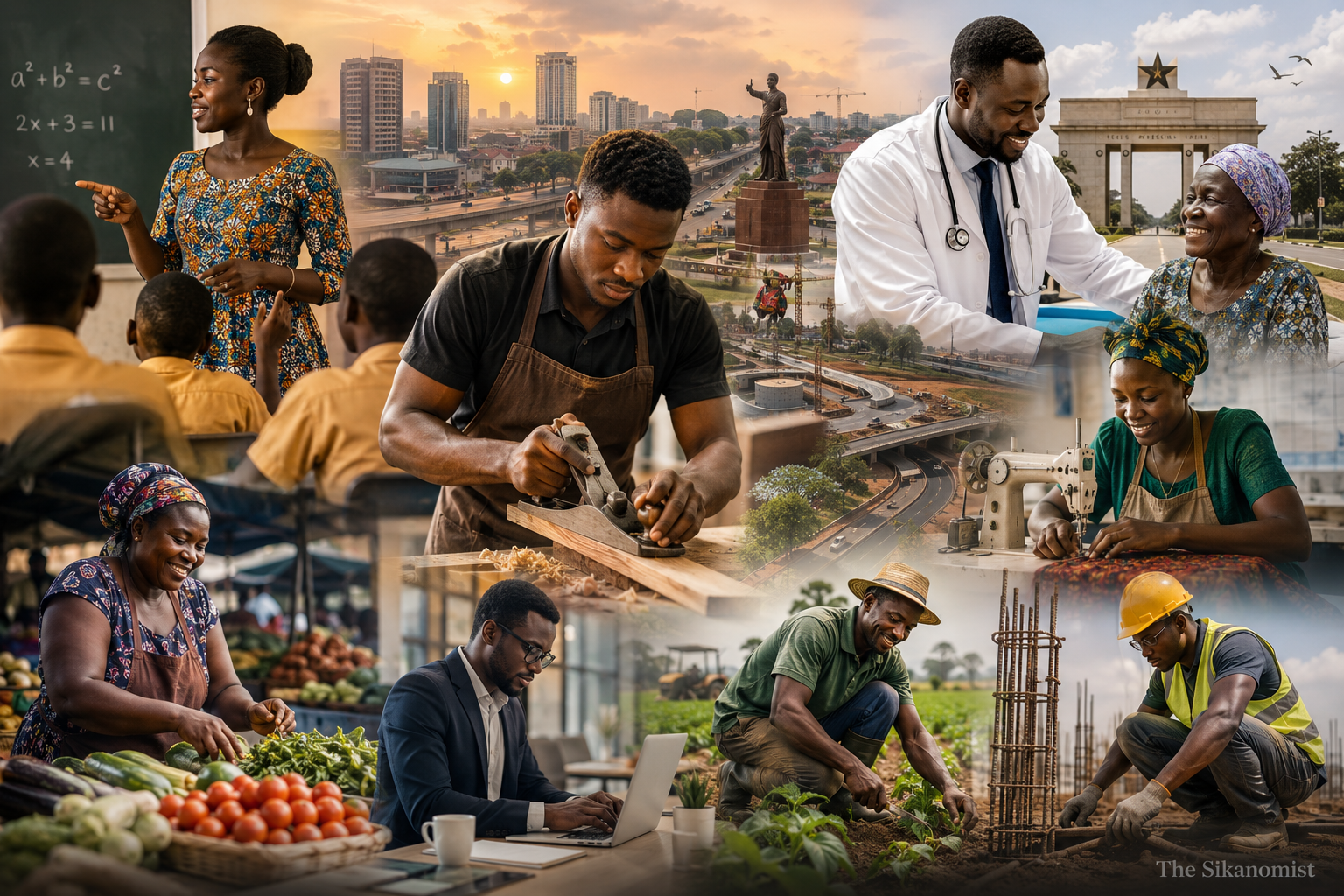
The Sikanomist | Ordinary Ghanaians doing ordinary things to make Ghana great
When people think about the world's most successful countries, they often picture modern cities, efficient transport systems, thriving businesses, excellent schools and advanced technology. It is easy to assume that these achievements are the result of extraordinary leaders or abundant natural resources. Yet history tells a different story. Great nations are rarely built by a few remarkable individuals alone. They are built by millions of ordinary people who decide, every day, to do ordinary things well.
This is an important lesson for Ghana. As we continue our journey towards greater prosperity, we should certainly expect capable leadership, sound policies and strong institutions. But the future of our nation will also depend on the choices made by teachers in classrooms, farmers in their fields, traders in our markets, nurses in our hospitals, artisans in their workshops, engineers on construction sites, entrepreneurs in their businesses and public servants in government offices. National development is not created in Parliament alone. It is created wherever Ghanaians carry out their daily responsibilities with care and integrity.
One of Ghana's greatest strengths is its people. Across the country, countless individuals work hard every day to provide for their families and contribute to society. Many display remarkable resilience despite economic challenges. What could transform this hard work into even greater national progress is a culture that consistently values excellence. Excellence is not about perfection. It is about doing the best work possible, paying attention to detail and taking pride in the quality of what we produce.
Consider a carpenter who ensures every piece of furniture is strong and beautifully finished. Think of a mechanic who repairs vehicles properly instead of looking for shortcuts. Imagine a teacher who prepares lessons thoroughly because every child deserves a quality education. Picture a trader who builds lasting customer trust by being honest about prices and product quality. These actions may seem small in isolation, but multiplied across millions of people they become the foundation of a stronger economy and a more respected nation.
Trust is another essential ingredient of national success. In societies where people trust one another, business transactions are easier, investments are more attractive and institutions function more effectively. Trust is built through everyday honesty—keeping promises, paying debts on time, respecting contracts and treating others fairly. Every honest transaction strengthens the social fabric that allows economies to grow.
Time is equally valuable. Around the world, successful organisations often share one common habit: they respect time. Meetings begin when scheduled. Services are delivered as promised. Deadlines are treated seriously. When individuals and institutions value punctuality, productivity rises, costs fall and confidence increases. If Ghana continues to develop a stronger culture of respecting time, the benefits will extend far beyond individual workplaces.
Another habit that strengthens nations is caring for what already exists. Development is not only about constructing new roads, schools, hospitals and markets. It is also about maintaining them. Public property belongs to everyone, and protecting it saves money that can be invested elsewhere. When citizens take responsibility for their surroundings, communities become cleaner, safer and more attractive for residents, businesses and visitors alike.
Innovation also begins with ordinary people. Every improvement starts with someone asking, "How can this be done better?" A farmer experimenting with new farming methods, a young software developer creating a useful application, or a market trader finding a more efficient way to serve customers—all contribute to national progress. Countries become innovative when people are encouraged to solve problems rather than simply accept them.
Young Ghanaians have a particularly important role to play. They represent one of the nation's greatest assets. Their energy, creativity and willingness to embrace new technologies can help shape the next chapter of Ghana's development. However, lasting success will depend not only on ambition but also on discipline, continuous learning and ethical conduct. Talent opens doors, but character determines how far people go.
Businesses, too, have responsibilities beyond making profits. Companies that invest in quality, train their employees, pay taxes honestly and serve customers with integrity help create a stronger economy for everyone. Likewise, public institutions perform best when they focus on service, accountability and professionalism. Development is a partnership between citizens, businesses and government, each fulfilling its responsibilities.
It is also important to recognise that building a great nation does not happen overnight. Progress often comes gradually. Improvements in education, healthcare, infrastructure, technology and governance require patience and persistence. Countries that have achieved remarkable success usually did so through decades of consistent effort rather than sudden transformation. Ghana's own journey will require the same determination.
Perhaps one of the most powerful ideas we can embrace is that no contribution is too small. A cleaner street, a well-taught lesson, a reliable business, a properly repaired road, a productive farm or a courteous customer service experience may not make national headlines, but together these everyday actions shape the character and reputation of a country. Every citizen has the opportunity to leave Ghana slightly better than they found it.
This perspective changes the way we think about patriotism. Loving one's country is not only expressed through words, songs or celebrations. It is demonstrated through daily actions—working honestly, respecting the law, protecting public property, helping neighbours, mentoring young people and striving for excellence in whatever role we occupy. True patriotism is visible in the quality of our work and the integrity of our conduct.
Ghana has every reason to believe in its future. The country enjoys political stability, a youthful population, entrepreneurial talent, rich cultural heritage and abundant natural resources. These advantages provide a solid foundation. The next stage of development will depend on how effectively we transform these strengths into sustained productivity, innovation and good governance.
The path to becoming one of Africa's leading success stories will not be defined by a single policy, election or investment. It will be shaped by millions of decisions made each day by ordinary Ghanaians. Every honest day's work, every well-served customer, every child inspired to learn and every act of responsibility brings the nation one step closer to the future it seeks.
Great nations are not built by extraordinary people doing extraordinary things every day. They are built by ordinary people who choose to do ordinary things extraordinarily well. If enough Ghanaians embrace that principle, the country's brightest days will not simply remain a dream—they will become a reality.
Question for Readers
What is one ordinary thing you can do better today that could make a positive difference to your family, your workplace, your community, or Ghana as a whole?