Why Ghana Needs Strong Local Government to Make the Big Leap in Development
Local Government
As Ghana pursues faster economic growth and better public services, stronger local government could become one of the country's most powerful tools for transforming communities, creating opportunities, and improving the quality of life for all.
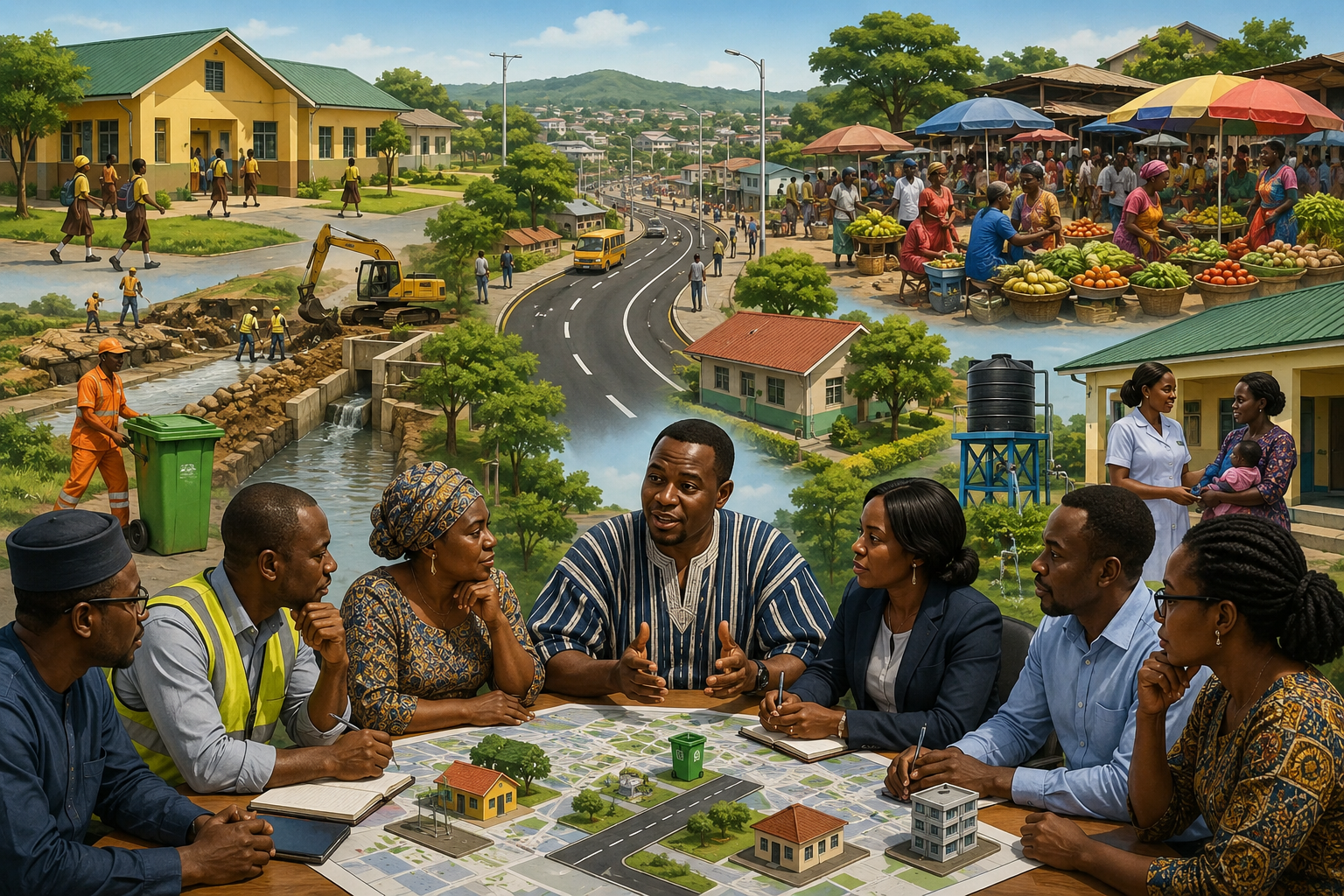
When Ghanaians talk about politics, the conversation often centres on the President, Parliament, ministers and political parties. National politics naturally attracts the most attention because it shapes the country's overall direction. Yet many of the issues that affect people's daily lives are decided much closer to home. The quality of local roads, markets, schools, sanitation, public health, drainage systems and community facilities depends greatly on the effectiveness of local government. If Ghana is to make its next big leap in development, strengthening local government should become a national priority.
Every developed nation has recognised that lasting progress cannot be achieved from the capital city alone. Development happens in towns, districts, municipalities and villages where people live, work and raise their families. National governments can set policies and provide funding, but it is local authorities that turn those policies into visible improvements. When local government works well, citizens experience the benefits of good governance in their everyday lives.
Ghana has made significant progress since the introduction of decentralisation. Metropolitan, Municipal and District Assemblies (MMDAs) have brought government closer to the people and created opportunities for communities to participate in local decision-making. However, many local authorities continue to face challenges, including limited financial resources, delays in the release of funds, inadequate technical capacity and growing demands from rapidly expanding communities. Addressing these challenges would allow local government to contribute even more effectively to national development.
Strong local government means more than simply having district assemblies. It means equipping local authorities with the resources, skilled personnel and institutional capacity needed to solve problems efficiently. It also means ensuring transparency, accountability and responsible financial management so that public resources are used wisely and citizens have confidence in their local institutions.
One of the greatest advantages of strong local government is that local leaders understand the unique needs of their communities. The priorities of a fishing community along the coast may differ from those of a farming district in the north or a rapidly growing municipality near Accra or Kumasi. Local authorities are often better placed to identify these needs and develop practical solutions that reflect local realities rather than applying the same approach everywhere.
Economic development also begins locally. Well-maintained roads help farmers transport produce to market. Efficient sanitation systems improve public health and make communities more attractive for businesses and tourism. Modern markets support traders and small enterprises. Reliable local infrastructure encourages investment and creates employment opportunities. When local economies become stronger, they contribute to national economic growth.
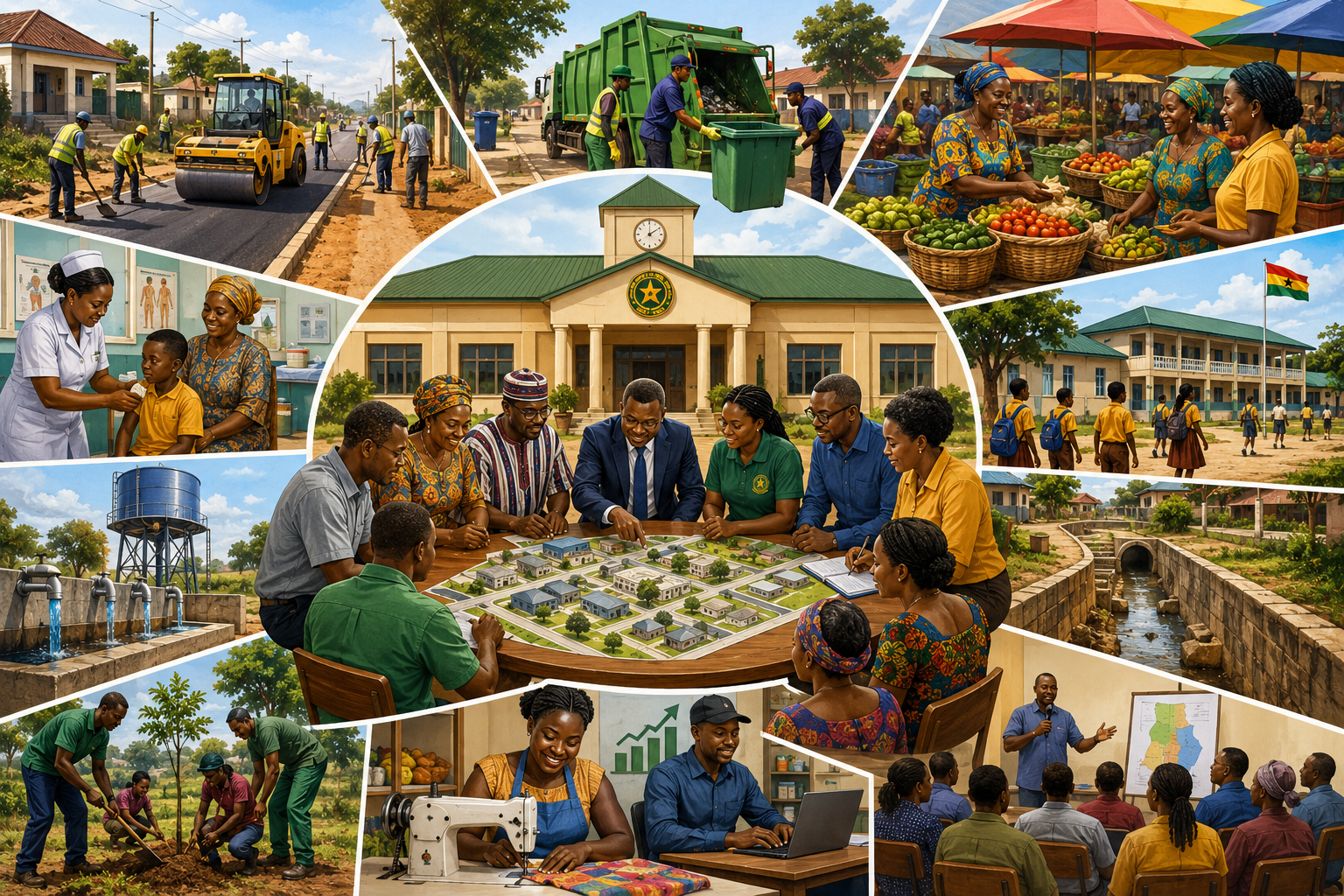
Local government also plays an important role in disaster preparedness and environmental management. Flood prevention, waste collection, drainage maintenance, land-use planning and the protection of public spaces are responsibilities that directly affect the safety and well-being of communities. Effective local administration can reduce the impact of natural disasters and help communities become more resilient as climate challenges increase.
Education and healthcare are also strengthened by capable local institutions. Although national ministries establish policies and standards, local authorities often support the maintenance of schools, health facilities and community programmes. Close cooperation between central government and local authorities can improve service delivery and ensure that public investments reach the people who need them most.
Strong local government is equally important for democracy. It provides citizens with opportunities to participate in public decision-making, raise concerns and hold leaders accountable. People are more likely to engage in governance when they can see the direct impact of their contributions within their own communities. This strengthens public trust and encourages greater civic responsibility.
Many countries that have achieved remarkable development have invested heavily in effective local governance. From well-managed municipalities in Europe to rapidly developing cities across Asia and Africa, successful local administration has helped improve infrastructure, attract investment and deliver better public services. While every country has its own circumstances, these experiences demonstrate that national progress is often built on strong local institutions.
For Ghana, strengthening local government should not be viewed as a political issue but as a national development strategy. Regardless of which political party is in office, communities across the country benefit when local authorities have the capacity to deliver quality services, plan responsibly and respond quickly to local challenges. Strong institutions provide continuity and stability beyond electoral cycles.
Achieving this vision will require sustained investment in local capacity, improved financial management, greater professional training for public servants and stronger collaboration between central and local government. It will also require active citizens who participate constructively in community development and hold their local leaders to high standards of integrity and performance.
Ghana has enormous potential. Across the country, communities are filled with hardworking people, entrepreneurs, farmers, teachers, health workers and young people with ambition and ideas. Giving local government the tools to support these communities can unlock new opportunities for growth, innovation and improved living standards.
The next great chapter of Ghana's development may not begin with a single national policy or a major project in the capital. It may begin with stronger district assemblies, better-managed municipalities and communities that have the power and capacity to shape their own future. If Ghana is determined to make the big leap in development, strengthening local government should be one of the country's highest priorities.
Question for Readers
If you could improve just one service provided by your local assembly, what would it be, and how would it improve life in your community?