Why Ghana Police Vehicles Should Be Brighter and More Visible
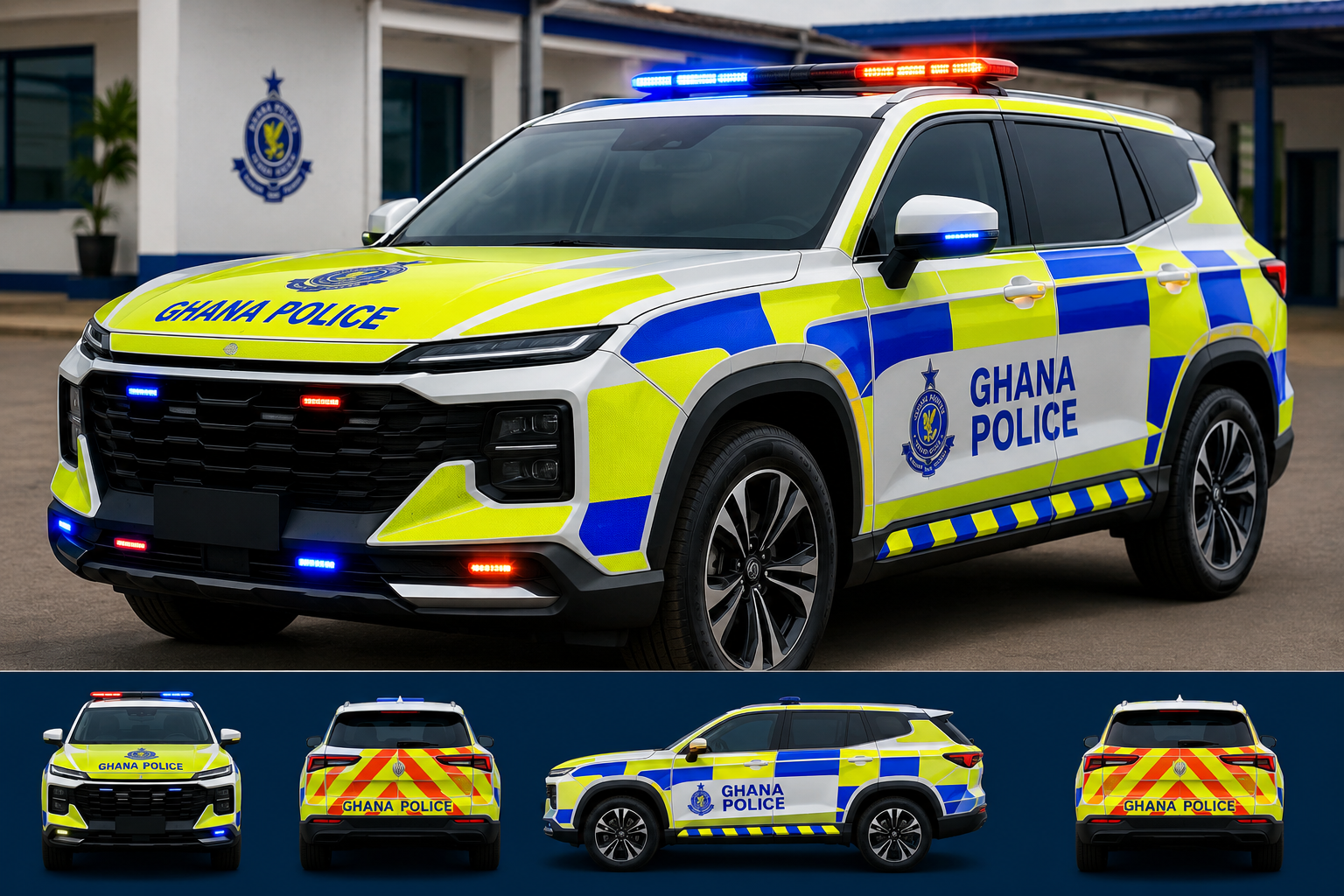
Sikanomist believe Ghana need Police cars so bright to be seen from afar
A Simple Change That Could Save Lives
When people think about police vehicles, they often think about authority, law enforcement and rapid response. However, there is another equally important purpose that is sometimes overlooked: safety. A police vehicle should not only carry officers from one location to another; it should also be highly visible to every road user in all weather conditions and at every hour of the day.
In Ghana, many police vehicles are painted in dark blue, black or other dark colours with relatively limited reflective markings. While these colours project professionalism and authority, they can become difficult to see at night, during heavy rain, in harmattan dust, or on poorly lit roads. As Ghana works to improve road safety and modernise its public services, it is worth asking whether the current appearance of police vehicles still reflects the highest standards of safety.
Visibility Is a Matter of Public Safety
Every year, police officers across Ghana respond to thousands of emergencies. They attend road traffic accidents, pursue criminals, control traffic, escort dignitaries, patrol neighbourhoods and provide assistance to motorists in distress. Many of these duties require officers to stop their vehicles on the roadside, often in dangerous locations where fast-moving traffic continues to flow.
A vehicle that cannot be seen clearly from a distance places everyone at greater risk. Drivers travelling at normal speeds need enough time to recognise an emergency vehicle, reduce their speed and move safely around it. Every additional second of warning can prevent a collision. In road safety, visibility is not simply a convenience; it is one of the most effective forms of accident prevention.
The Problem with Dark-Coloured Police Vehicles
Dark-coloured vehicles naturally blend into their surroundings after sunset. On roads with poor street lighting, a dark blue or black police vehicle parked on the shoulder can become surprisingly difficult to distinguish until a driver is very close. The problem becomes even greater during heavy rainfall, fog or the dusty conditions created by the harmattan season.
Although police vehicles are fitted with flashing emergency lights, these lights alone cannot guarantee that approaching motorists will notice the vehicle in time. Curves in the road, large vehicles, bad weather and visual distractions can reduce the distance from which emergency lights are seen. A brighter vehicle body combined with reflective markings provides an additional layer of protection that works even when the flashing lights are less noticeable.
Why Reflective Markings Matter
Reflective decals are specially designed materials that return light from vehicle headlights back towards the driver. This makes the vehicle appear much brighter at night without requiring any additional electricity.
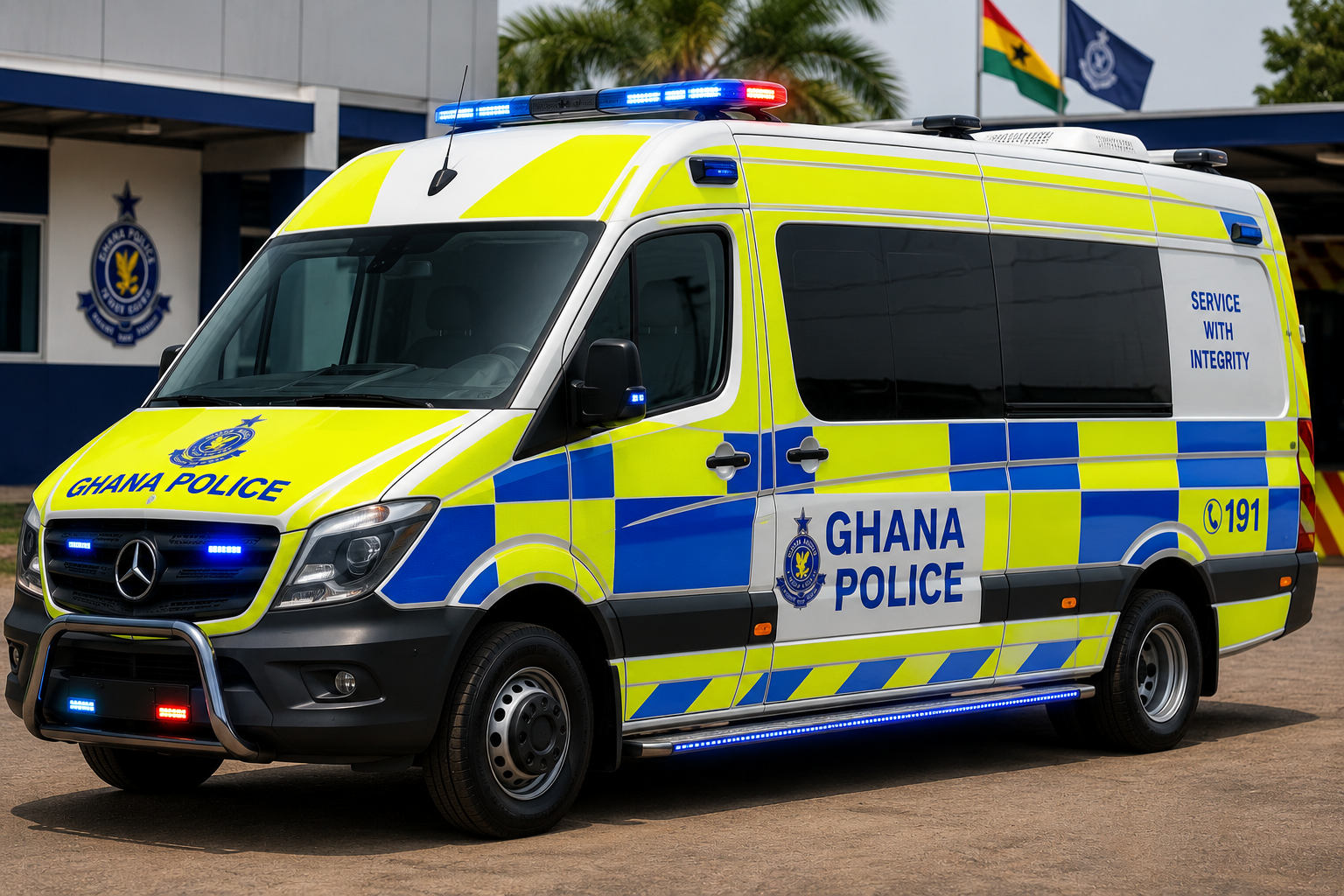
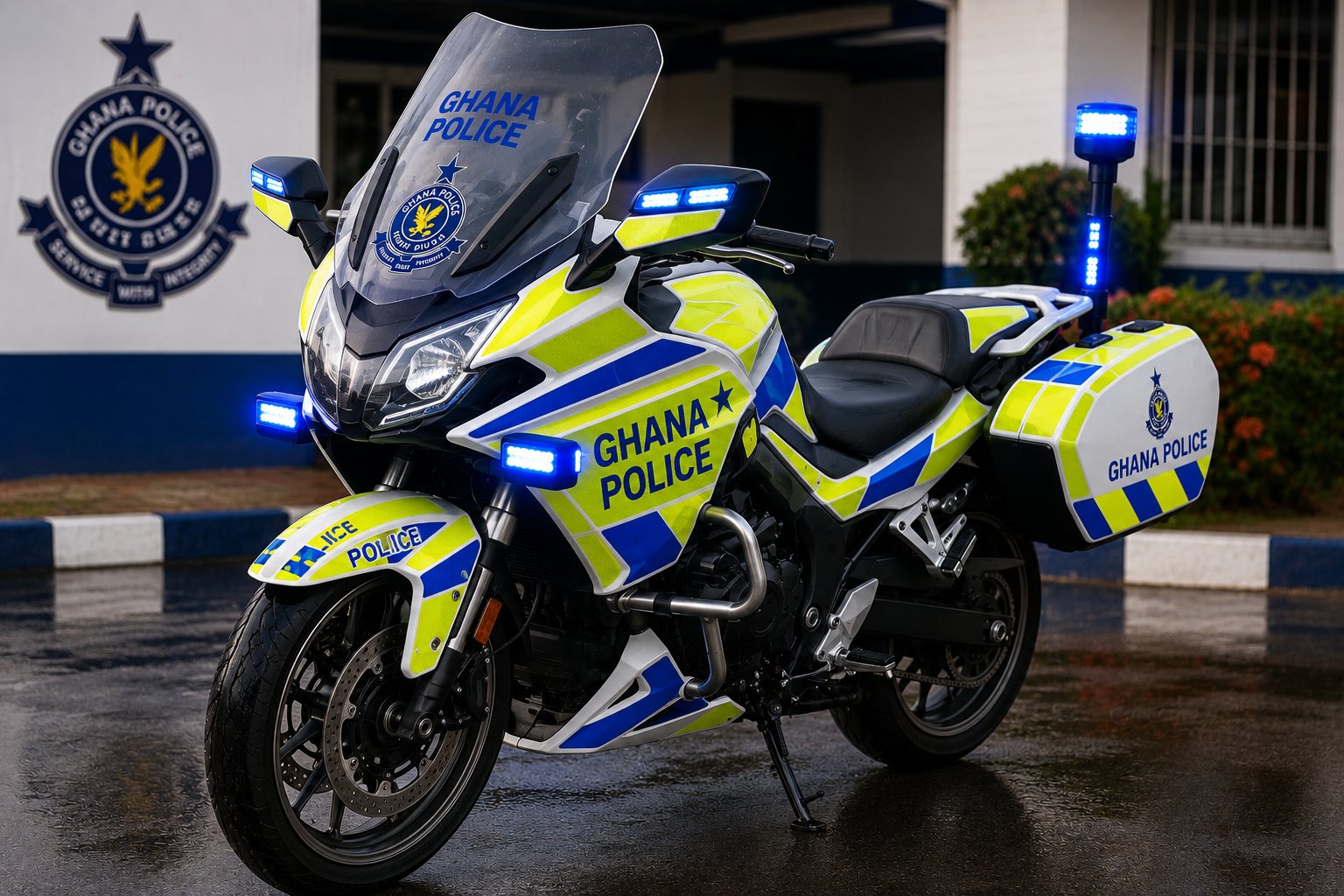
Modern emergency vehicles in many countries use reflective materials on their sides, rear panels, doors, bumpers and even around emergency lighting systems. These markings allow drivers to recognise emergency vehicles from much greater distances, giving them more time to react safely.
Rear reflective chevrons, which use alternating high-visibility colours, have become a common safety feature on emergency vehicles across many parts of the world because they are particularly effective in warning approaching motorists that they are nearing a stationary emergency vehicle.
Learning from International Best Practice
Many countries have gradually redesigned their police vehicles with safety as the main priority. Police services in the United Kingdom, Sweden, Norway, Australia, New Zealand and several European countries now use highly visible vehicle liveries that combine bright colours with reflective graphics.
These designs were not adopted to make police vehicles more attractive. They were introduced after years of research showing that high-visibility emergency vehicles reduce the likelihood of roadside collisions and improve officer safety.
Ghana does not need to copy another country's design exactly. Instead, the Ghana Police Service could develop its own uniquely Ghanaian vehicle livery that reflects national identity while embracing internationally recognised road safety standards.
Protecting the Officers Who Protect Us
Police officers regularly stand outside their vehicles while directing traffic, investigating accidents, conducting roadside checks and assisting members of the public. During these moments, the police vehicle becomes more than just transport. It acts as a protective barrier between officers and moving traffic.
If approaching motorists fail to notice the vehicle early enough, officers are placed in unnecessary danger. Sadly, around the world, emergency workers have lost their lives after being struck by vehicles while carrying out their duties beside the road.
Improving vehicle visibility is therefore not just about protecting police equipment. It is about protecting human lives.
Helping the Public Identify the Police More Quickly
Highly visible police vehicles also benefit the public. During emergencies, people often look for police officers to seek assistance or report incidents. A brightly coloured and clearly marked police vehicle can be recognised immediately, even from a considerable distance.
This is particularly valuable during large public gatherings, sporting events, festivals and natural disasters, where crowds can make it difficult to locate emergency services quickly.
Greater visibility also strengthens the reassuring presence of the police. Citizens are more likely to feel secure when they can clearly see patrol vehicles operating within their communities.
A Cost-Effective Investment
Some may argue that changing the appearance of police vehicles would require additional government spending. However, reflective decals and high-visibility safety markings are relatively inexpensive compared with the financial and human cost of road traffic collisions.
A phased implementation would allow the Ghana Police Service to introduce the changes gradually. New vehicles could adopt the updated design immediately, while existing vehicles could receive reflective markings during routine servicing or repainting.
This approach would spread the cost over several years while steadily improving the safety of the entire fleet.
Modernising the Ghana Police Service
The Ghana Police Service has made significant progress in professional training, digital policing, community engagement and operational capacity. Updating vehicle safety standards would be another important step in this journey of modernisation.
A modern police vehicle should combine professionalism, authority and maximum visibility. Bright colours, reflective graphics and clear identification do not reduce the dignity of the police. Instead, they demonstrate that the organisation places the highest value on the safety of its officers and the public they serve.
A National Conversation Worth Having
Road safety is everyone's responsibility. Engineers design safer roads, manufacturers build safer vehicles, governments create better regulations and drivers are expected to act responsibly. Emergency services should also benefit from the latest safety practices available.
The appearance of police vehicles may seem like a small issue compared with the many challenges facing Ghana today. Yet history shows that many significant improvements begin with practical changes that make everyday life safer for everyone.
If a brighter vehicle with better reflective markings can prevent even one fatal collision involving a police officer or a member of the public, then the investment is worthwhile.
Conclusion
The primary purpose of a police vehicle is not to look powerful but to help officers perform their duties safely and effectively. Visibility is one of the most important safety features any emergency vehicle can possess.
As Ghana continues to improve its roads and strengthen its public institutions, adopting brighter vehicle colours and high-quality reflective markings would be a practical step towards protecting police officers, reducing roadside accidents and improving public confidence.
The Ghana Police Service has always stood at the front line of protecting the nation. It is only fitting that the nation should provide its officers with vehicles that are as safe and visible as modern road safety standards demand.
Sometimes, saving lives begins with something as simple as making sure everyone can see those who are there to protect them.
Reader's Question
Dear readers, what's your take on this? Should Ghana Police vehicles be redesigned with brighter colours and reflective markings to improve road safety? Share your thoughts in the comments below.